
Publishing Scholarly Archaeology since 1997
Publishing Scholarly Archaeology since 1997
Log in | My Account | Basket Twitter Facebook LinkedIn
Advanced Search
Download Sample PDF
H 290 x W 205 mm
152 pages
42 figures, 19 tables, 10 plates, 2 graphs (colour throughout)
Published Nov 2025
ISBN
Paperback: 9781805830702
Digital: 9781805830719
Keywords
Food consumption; Dietary habits; Archaeology; Archaeometry; Roman period; Early Medieval period; Material culture; Pottery; Amphorae; Bronze vessels; Gastronomic practices; Dining traditions; Food preparation; Stable isotope analysis; Dietary reconstruction; Funerary practices; Religious influences; Trade networks; Mobility: Food distribution; Social identity; Economic structures; Cultural interactions
Related titles

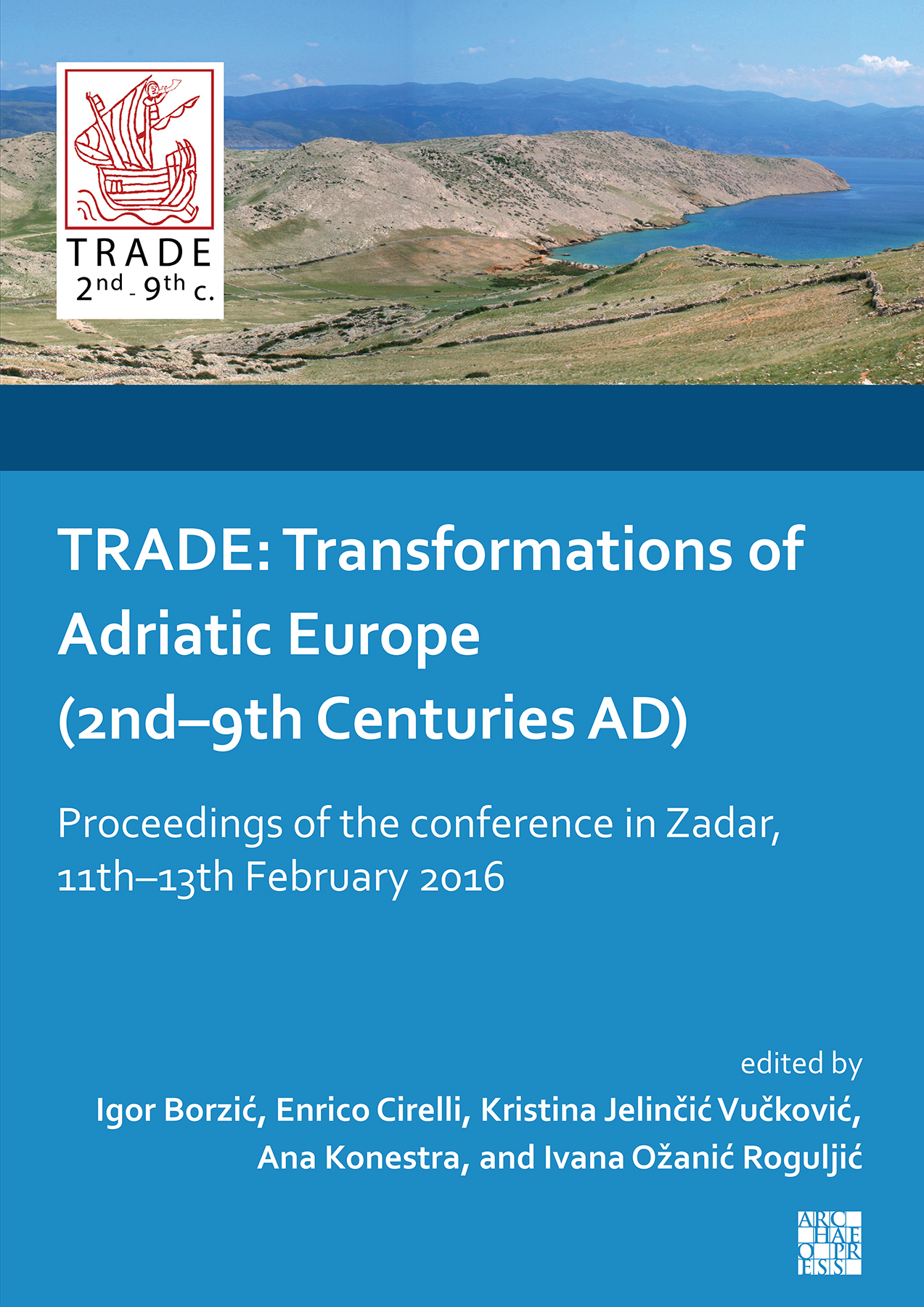
Eating and Drinking along Ancient Roads and Rivers: Study Opportunities, Archaeological Sources and Open Issues about Diet Habits
Roads and Rivers 3
Edited by Ivana Ožanić Roguljić, Željka Bedić, Angelina Raičković Savić

Paperback
£40.00
Includes PDF
PDF eBook
(personal use)
£16.00
PDF eBook
(institutional use)
£40.00
 Add to wishlist
Eating and Drinking Along Ancient Roads and Rivers explores food production, consumption, and cultural meaning from Roman to early Medieval times. Using archaeological and scientific methods, it reveals how diet shaped identity, trade, and social life across regions.
Contents
Introduction
List of contributors
Food for the Living and for the Dead: Pottery of Roman Period Dolenjska – Kaja Stemberger Flegar and Ana Kovačič
A Gastronomic Guide through Viminacium: How to Eat like a Roman – Angelina Raičković Savić
A Cake Mould from Istria – Alka Starac
Pane Vinv Radic Pavperis Cena – Verena Perko and Kaja Stemberger Flegar
Early Imperial Amphorae from the Kočevarjev vrt Site in Vrhnika (Nauportus) – Tina Berden
From the Field to the Table: Food Production Evidence from Late Antique Pits from Ilok – Palace of the Dukes of Ilok (Eastern Croatia) – Kristina Jelinčić Vučković, Asja Tonc, Antonela Barbir and Marko Dizdar
Bronze Vessels and Changing Dining Patterns in Late Antique Britain – Jason Lundock
Food “To Go” – Anita Rapan Papeša
Multi-Tissue Interpretations of Health and Paleodiet in Avar Period Šarengrad, Croatia – J. Marla Toyne, Mario Carić, Andrea Rimpf, Jonathan Barkmeier and Mario Novak
An Overview of Stable Isotope Analyses of Antique and Early Medieval Skeletal Remains from Croatia – Željka Bedić
Artificial Cranial Deformation and Dietary Habits of a Child from the Great Migration Period (Serbia) – Ksenija Djukić, Veda Mikašinović, Milutin Mićić and Viktorija Uzelac
Fish on the Bishop’s Table. The Analysis of Data Regarding the Procurement and Consumption of Fish by Oswald Túz, Bishop of Zagreb – Sebastijan Stingl
Roman Food and the Popularisation of Science – Ivana Ožanić Roguljić
About the Author
Ivana Ožanić Roguljić works as an archaeologist (Senior Research Associate) at the Institue of Archaeology, Zagreb, specialising in the classical period, with a particular focus on instrumentum domesticum, the history of food, remote sensing and communications. She works on The Database of Antique Archaeological Sites of the Republic of Croatia. She is the Principal Investigator of the project ‘Synergy of Diversity: Archeology of Landscape and Technological Traditions in Continental and Adriatic Croatia (SirAkt)’.
Željka Bedić works as a Research Associate in the Centre for Applied Bioanthropology at the Institute for Anthropological Research in Zagreb. Her main areas of research cover bioarchaeology, paleopathology, trauma analysis, paleodontology and contagious diseases in archaeological populations and she is a member of several scientific organisations relating to these fields. Her research output includes, among others, scientific papers, book chapters and a school textbook.
Angelina Raičković Savić is a Senior Research Associate at the Institue of Archaeology, Belgrade, principally focused on the project ‘Viminacium, Roman city and Legionary Fort’. Her interests relate primarily to Roman pottery and the use of scientific techniques for material analysis.
Archaeopress Publishing Ltd
First and Second Floor
13-14 Market Square
Bicester
Oxfordshire OX26 6AD
United Kingdom
Tel +44 (0) 1865 311914 | fax +44 (0) 1865 512231 | email info@archaeopress.com
