
Publishing Scholarly Archaeology since 1997
Publishing Scholarly Archaeology since 1997
Log in | My Account | Basket Twitter Facebook LinkedIn
Advanced Search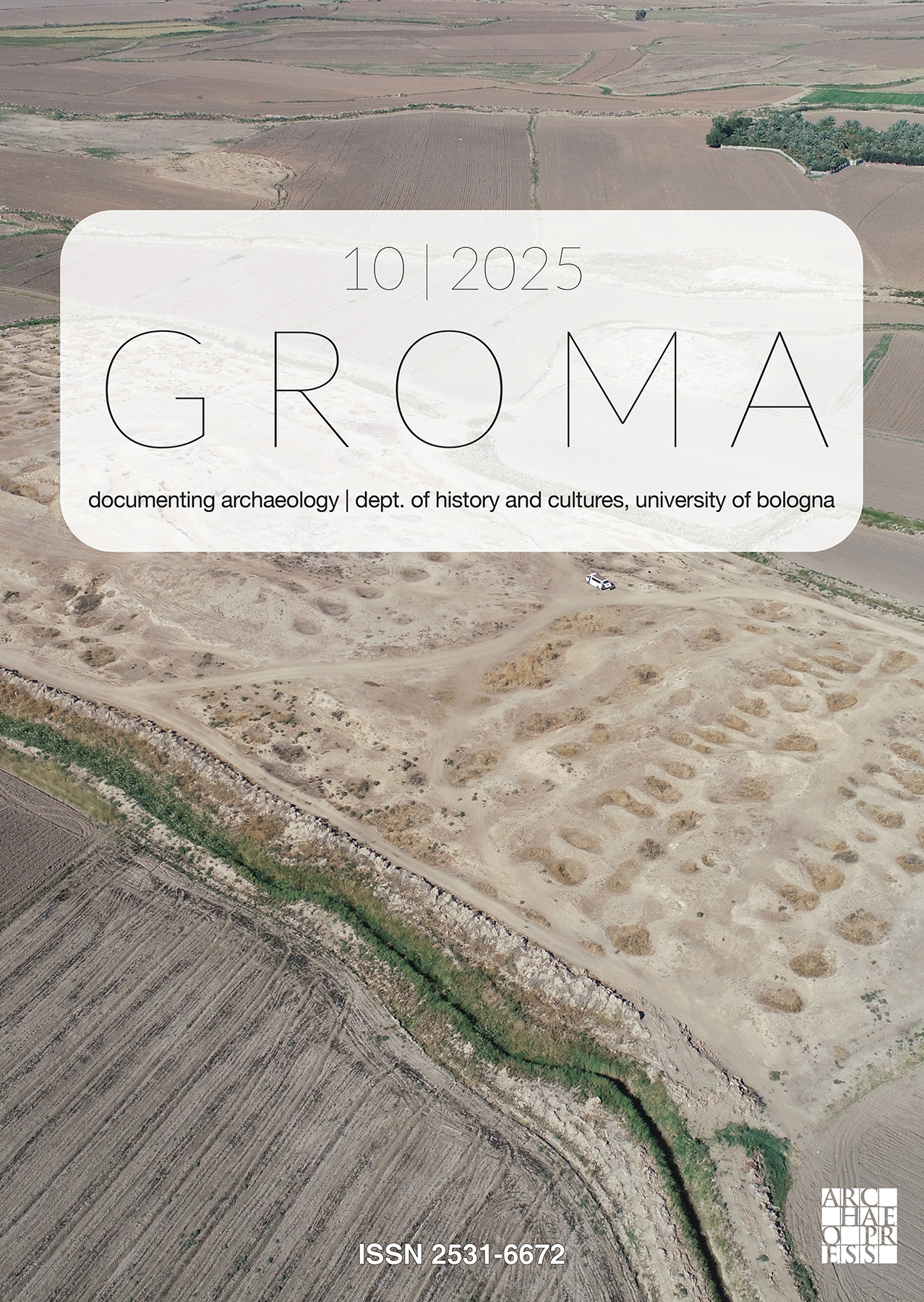
H 255 x W 174 mm
126 pages
72 figures (colour throughout)
Published Nov 2026
ISBN
Paperback: 9781805833949
Digital: 9781805833956
Related titles


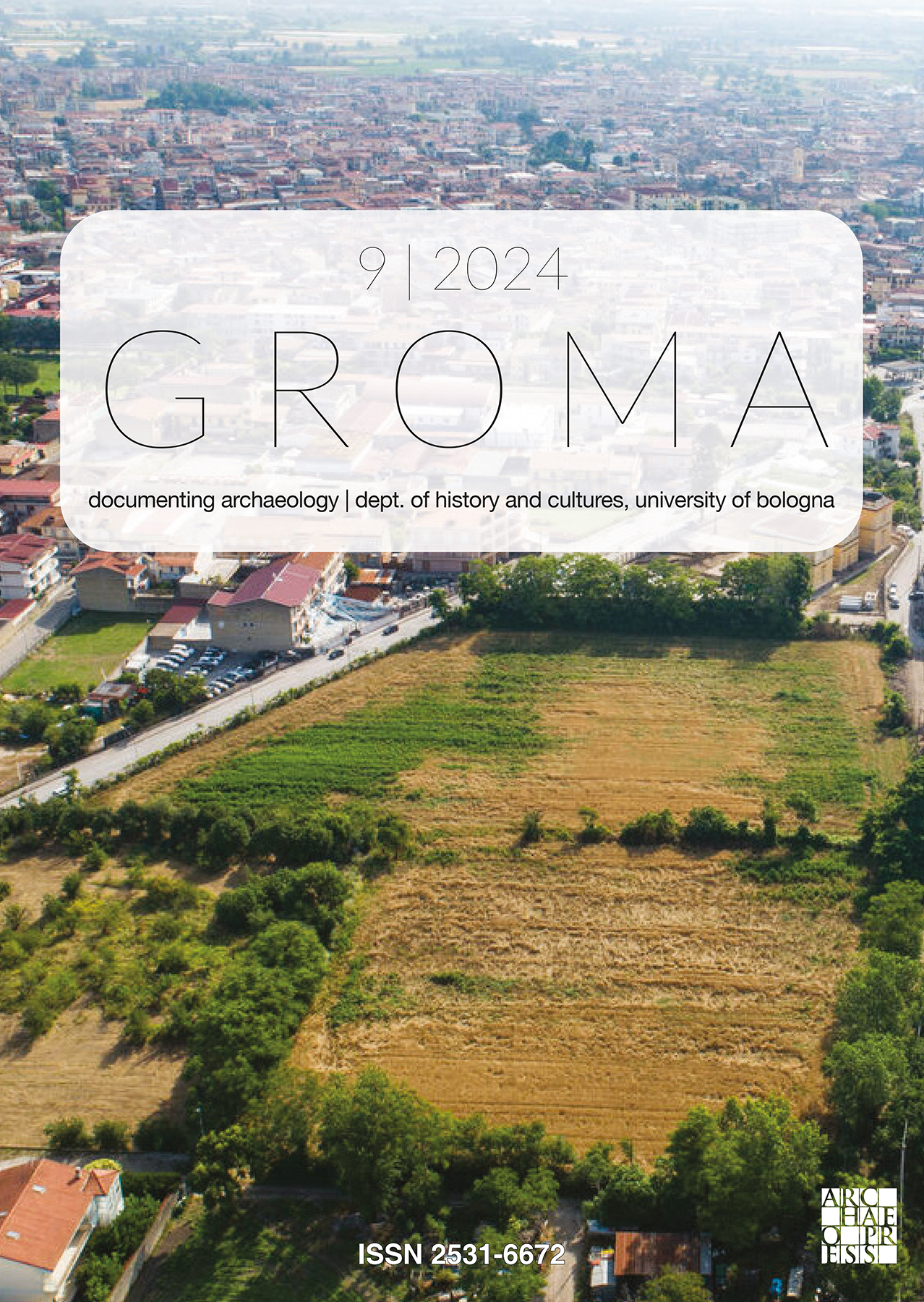
Groma: Documenting Archaeology 10
Groma: Issue 10 2025
Documenting Archaeology (Dept of History and Cultures, University of Bologna)
Edited by Julian Bogdani

Paperback
£50.00
 Add to wishlist
Exploring the relationship between archaeological research, technological innovation and heritage preservation, this issue brings together studies on landscape archaeology, funerary contexts, digital documentation, remote sensing and 3D survey, with case studies from Italy, Oman and Iraqi Kurdistan.
Contents
Articles
Burial continuity and visibility in changing landscapes of northern Marche (Italy): new data and perspectives from the SEARCH Project. – Federica Boschi
From stone to screen: applying Virtual Reflectance Transformation Imaging (V-RTI) methodology to rock art in Dhofar, southern Oman – Angela Bosco, Daniele De Luca, Alexia Pavan and Rosario Valentini
Documenting to preserve: archaeological recording as a tool for risk mitigation in coastal heritage sites – Alexia Pavan
Documenting Gawr Tepe: remote sensing and 3D survey for mapping and monitoring a multi-period site in Iraqi Kurdistan – Domenico Andreucci and Veronica Castignani
Notes
Interdisciplinary approaches to the Bronze Age cemetery of Cimillia–Mursia (Pantelleria): from 3D survey to public dissemination – Maurizio Cattani, Lorenzo Bonazzi, Andrea Fiorini and Roberto Meschini
Traces of transhumance and summer pasturing in the Marche Apennines between the Classical and Medieval Ages. Evidence of an (almost) invisible economy. – Carlo Bicchierai
Reviews
G. D’Alessio, S. De Nisi, C. Felici, D. Gangale Risoleo, S. Pesce and I. Raimondo (eds). Landscape 4: una sintesi di elementi diacronici. Pianificazione e mondo antico: tra i dogmi del passato e le interpretazioni recenti. Oxford: Archaeopress | Book Review – Giulia Iadicco
About the Author
Enrico Giorgi is Associate Professor of Methodology and Landscape Archaeology at the University of Bologna. He is the director of the journal Groma: Documenting Archaeology and directs research on Adriatic archaeology.
Julian Bogdani is an assistant professor at Sapienza University of Rome, where he teaches Digital Archaeology and Digital Humanities. The main focus of his research is the theoretical and practical issues related to the application of Computer Science to the archaeological and historical domain. He is the developer of Bradypus, a cloud-based database for archaeology. He directs the archaeological mission of Sapienza at Çuka e Ajtoit, a Hellenistic, Roman and Late Antique site in Albania.
Archaeopress Publishing Ltd
First and Second Floor
13-14 Market Square
Bicester
Oxfordshire OX26 6AD
United Kingdom
Tel +44 (0) 1865 311914 | fax +44 (0) 1865 512231 | email info@archaeopress.com
