
Publishing Scholarly Archaeology since 1997
Publishing Scholarly Archaeology since 1997
Log in | My Account | Basket Twitter Facebook LinkedIn
Advanced Search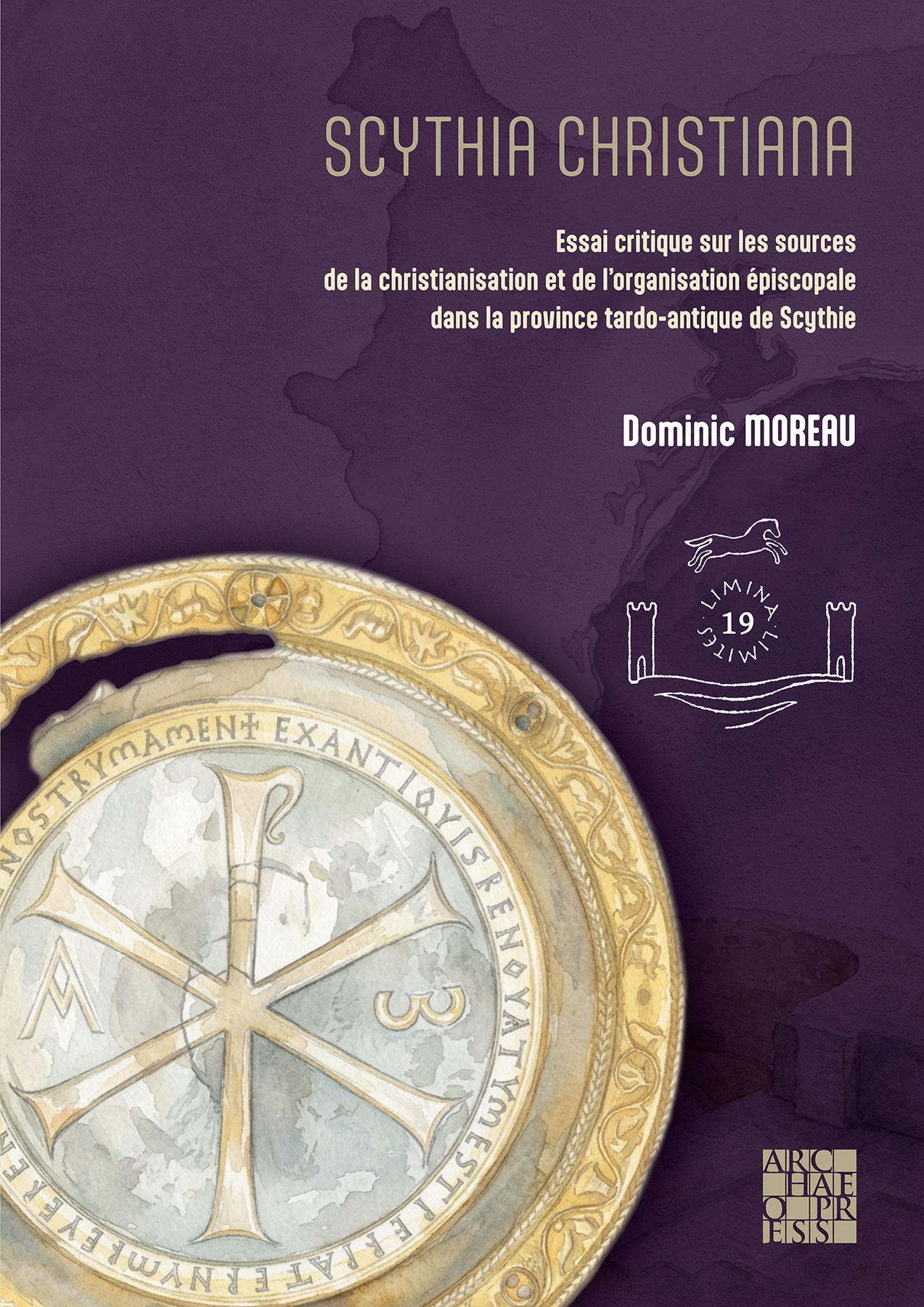
Download Sample PDF
H 290 x W 205 mm
186 pages
64 figures (colour throughout)
French text
Published Dec 2026
ISBN
Paperback: 9781803272726
Digital: 9781805834465
Keywords
Scythia Minor; Lower Danube; Black Sea; Tomis; Late Roman Empire; Late Antiquity; Early Christianity; Christianisation; Episcopal Organisation; Ecclesiastical Hierarchy; Bishops; Episcopal Sees; Christian Archaeology; Christian Basilicas; Epigraphy; Hagiography
Related titles


Limina/Limites: Archaeologies, histories, islands and borders in the Mediterranean (365-1556) 19
Scythia Christiana
Essai critique sur les sources de la christianisation et de l’organisation épiscopale dans la province tardo-antique de Scythie

Paperback
£35.00
 Add to wishlist
This book reassesses the Christianisation of the late Roman province of Scythia, combining literary, epigraphic and archaeological evidence. Challenging long-held assumptions about early churches and bishoprics, it reveals a diverse Christian landscape centred on Tomis and offers a critical reappraisal of the region’s ecclesiastical history.
Contents
Préface
Avant-Propos
Introduction – Reconfigurations et christianisation du monde danubien dans l’Antiquité tardive
1. Un espace fluvial structurant
2. Une géographie administrative en recomposition
3. Une géographie ecclésiastique en formation
4. Le Bas-Danube et la prouincia Scythia comme observatoire
5. Pour une réévaluation critique des sources de la christianisation et de l’organisation épiscopale
Chapitre 1 – Les plus anciens témoignages du christianisme en Scythie Mineure
(période préconstantinienne)
1. La Scythia comme construction territoriale et administrative
2. La mise en mémoire des débuts du christianisme
3. Les témoignages matériels du paléochristianisme à l’épreuve de la critique
Chapitre 2 – L’organisation épiscopale de la prouincia Scythia : sources textuelles et relectures historiographiques
1. L’affirmation du système unitaire (ive-ve siècles)
2. L’apparente continuité du modèle scythe au vie siècle
3. La multiplication des sièges : construction d’une théorie
Chapitre 3 – De la Basilique à l’évêché ? Les limites de l’identification des sièges épiscopaux dans la prouincia Scythia
1. Les premiers sites interprétés comme sièges épiscopaux
2. Les autres sites mentionnés par Hiéroclès et par la Notitia no 3
3. Les limites de la théorie de la multiplication des sièges épiscopaux
Conclusion – Repenser la Scythia Christiana
Appendice – Dossier critique des mentions épiscopales en Scythie
Bibliographie
English Summary
Indices
Table des Illustrations
About the Author
Dominic Moreau is Associate Professor (maître de conférences HDR) of Late Antique History at the University of Lille and a permanent member of HARTIS-UMR 9028 (University of Lille, CNRS, French Ministry of Culture, Inrap). A historian and archaeologist, his research combines textual and material evidence to explore the institutions of the late Roman state and the Church, canon law, imperial frontiers, and the Christian transformation of urban and provincial landscapes, particularly in South-Eastern Europe. The present volume is a major outcome of DANUBIUS, his research project on the Christianisation of the Lower Danube and the northern Black Sea region, mainly funded by the French National Research Agency (ANR). He co-directed the international archaeological mission at Zaldapa, Bulgaria, from 2018 to 2022. He coordinates the HAEMUS International Research Network, serves as Editor-in-Chief of The Chronicles of Haemus, and is General Editor of the series Rome and After in Central and Eastern Europe (Brepols).
En français
Dominic Moreau est maître de conférences HDR en histoire de l’Antiquité tardive à l’Université de Lille et membre permanent d’HARTIS-UMR 9028 (Université de Lille, CNRS, ministère de la Culture, Inrap). Historien et archéologue, il confronte sources textuelles et données matérielles pour étudier les institutions de l’État et de l’Église dans l’Empire romain tardif, le droit canonique, les frontières impériales ainsi que la transformation chrétienne des paysages urbains et provinciaux, particulièrement en Europe du Sud-Est. Le présent ouvrage constitue l’un des principaux aboutissements de DANUBIUS, son projet de recherche sur la christianisation du Bas-Danube et du nord de la mer Noire, principalement financé par l’Agence nationale de la recherche (ANR). Il a codirigé la mission archéologique internationale à Zaldapa, en Bulgarie, de 2018 à 2022. Il coordonne le réseau international de recherche HAEMUS, dirige la revue The Chronicles of Haemus et la collection Rome and After in Central and Eastern Europe chez Brepols.

Archaeopress Publishing Ltd
First and Second Floor
13-14 Market Square
Bicester
Oxfordshire OX26 6AD
United Kingdom
Tel +44 (0) 1865 311914 | fax +44 (0) 1865 512231 | email info@archaeopress.com
