
Publishing Scholarly Archaeology since 1997
Publishing Scholarly Archaeology since 1997
Log in | My Account | Basket Twitter Facebook LinkedIn
Advanced Search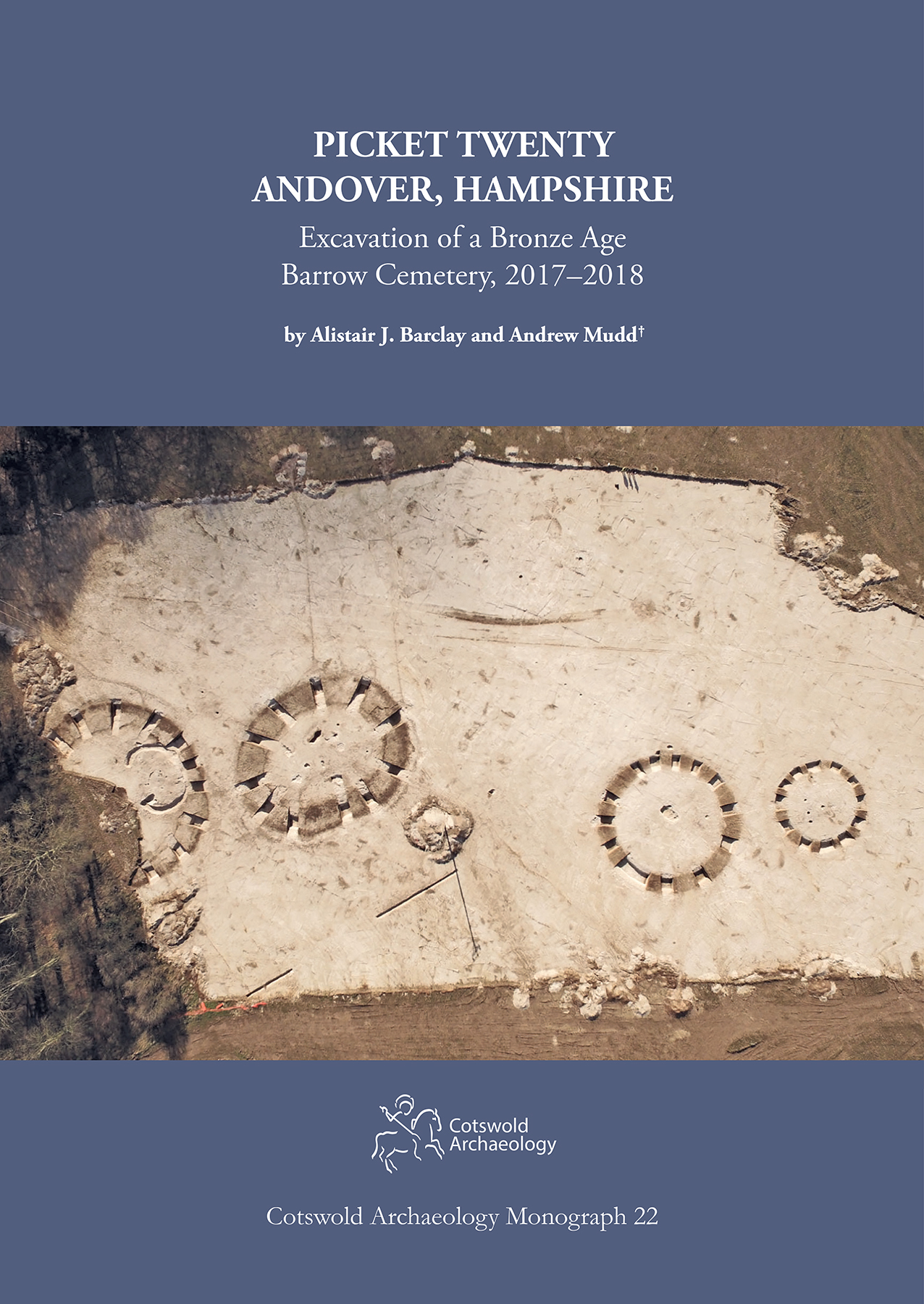
H 297 x W 210 mm
120 pages
Published Aug 2026
ISBN
Paperback: 9781917215015
Keywords
Chalcolithic Archaeology; Early Bronze Age Archaeology; Barrow cemetery; cremation burials; inhumation burials; Roman Archaeology
Related titles


Cotswold Archaeology Monograph 22
Picket Twenty Andover, Hampshire: Excavation of a Bronze Age Barrow Cemetery, 2017–2018
By Alistair J. Barclay, Andrew Mudd

Paperback
£20.00
 Add to wishlist
Excavation at Picket Twenty, Andover ahead of a new housing development, focused on the remains of an Early Bronze Age (2150–1500 BC) barrow cemetery. The earliest barrow contained a Beaker burial and may have been a ‘founder’ monument. Substantial deposits of Roman finds were made in the barrow ditches, perhaps reflecting some ritual deposition.
Archaeopress Publishing Ltd
First and Second Floor
13-14 Market Square
Bicester
Oxfordshire OX26 6AD
United Kingdom
Tel +44 (0) 1865 311914 | fax +44 (0) 1865 512231 | email info@archaeopress.com
