This volume presents the extensive excavations and research at Bewsey Old Hall, tracing its development from a 13th‑century timber hall for the Butlers of Warrington to the later brick and Georgian phases. Rich medieval and post‑medieval finds place the site within its regional context and highlight its long, complex history.
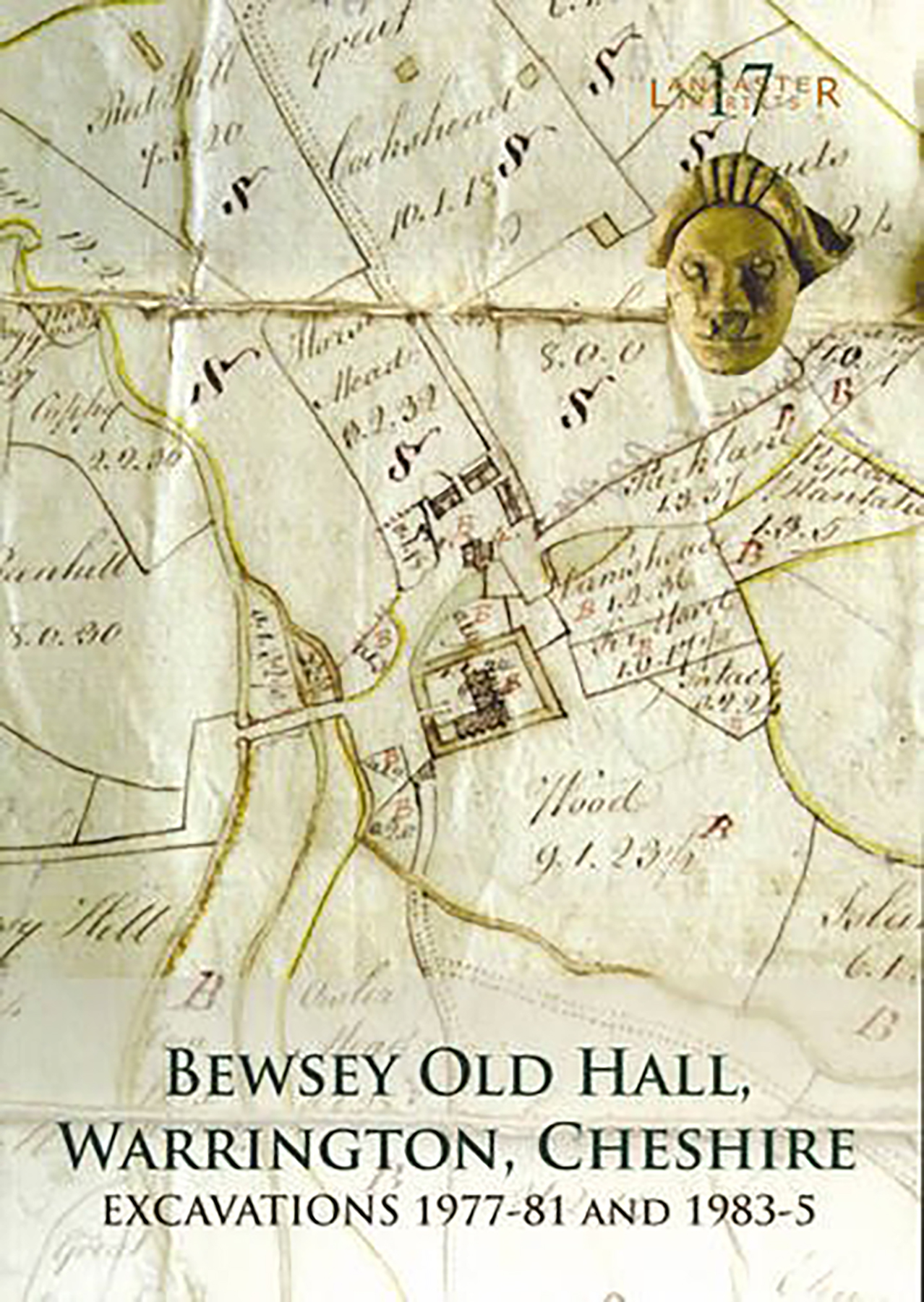
Bewsey Old Hall has a long and archaeologically well-documented existence. It is a Scheduled Monument , but was effectively derelict in the late 1970s, when plans for sympathetic restoration and redevelopment of this important moated site gave the opportunity for the standing buildings (some dating back to the seventeenth century) to be recorded. The extensive archaeological excavations examined a large part of the moated platform, and were intended to place the house within its physical and chronological context. In addition, this was supplemented by detailed documentary research, which offered an unusual chance to place the site within its regional socio-political context. Excavations took place in 1977-81 and again in 1983-5. Analysis of the large body of data recovered, begun in 1985 but laid aside in 1987, was resumed in 1993 and finally completed in 1996, at which point a draft report was submitted to English Heritage. A revised version of that draft forms the basis of this publication.
Bewsey’s origins lay in the thirteenth century, perhaps originating as a hunting lodge in the royal forest of Burtonwood. It became the principal seat of the Butlers, Barons of Warrington, after their original hall, Mote Hill in Warrington, was destroyed by fire in the late thirteenth century. The earliest coherent archaeological evidence from the site suggests that a large timber-built aisled hall and a range of smaller service buildings were erected on the site at about that time, presumably to house the baron and his household. The Butlers were to stay at Bewsey until the sixteenth century, rebuilding their hall on stone foundations in the fourteenth century, after a substantial fire, and modifying it and maintaining it as circumstances required. By the mid-sixteenth century, some of the principal buildings had fallen into disrepair, but a new northern range was built shortly before 1586, when Bewsey changed hands, passing briefly to the Earl of Leicester. When Robert Dudley died in 1588, the house, although probably intended for his illegitimate son, Robert, passed first to his brother Ambrose, earl of Warwick, who died shortly afterwards. For a decade, the ownership of the property was disputed, but in 1597, Robert Dudley sold the estate to the Ireland family, and it remained with them and their successors, the Athertons, until the mid-twentieth century.
Bewsey Old Hall has a long and archaeologically well-documented existence. It is a Scheduled Monument , but was effectively derelict in the late 1970s, when plans for sympathetic restoration and redevelopment of this important moated site gave the opportunity for the standing buildings (some dating back to the seventeenth century) to be recorded. The extensive archaeological excavations examined a large part of the moated platform, and were intended to place the house within its physical and chronological context. In addition, this was supplemented by detailed documentary research, which offered an unusual chance to place the site within its regional socio-political context. Excavations took place in 1977-81 and again in 1983-5. Analysis of the large body of data recovered, begun in 1985 but laid aside in 1987, was resumed in 1993 and finally completed in 1996, at which point a draft report was submitted to English Heritage. A revised version of that draft forms the basis of this publication.
Bewsey’s origins lay in the thirteenth century, perhaps originating as a hunting lodge in the royal forest of Burtonwood. It became the principal seat of the Butlers, Barons of Warrington, after their original hall, Mote Hill in Warrington, was destroyed by fire in the late thirteenth century. The earliest coherent archaeological evidence from the site suggests that a large timber-built aisled hall and a range of smaller service buildings were erected on the site at about that time, presumably to house the baron and his household. The Butlers were to stay at Bewse


 Add to wishlist