
Publishing Scholarly Archaeology since 1997
Publishing Scholarly Archaeology since 1997
Log in | My Account | Basket Twitter Facebook LinkedIn
Advanced Search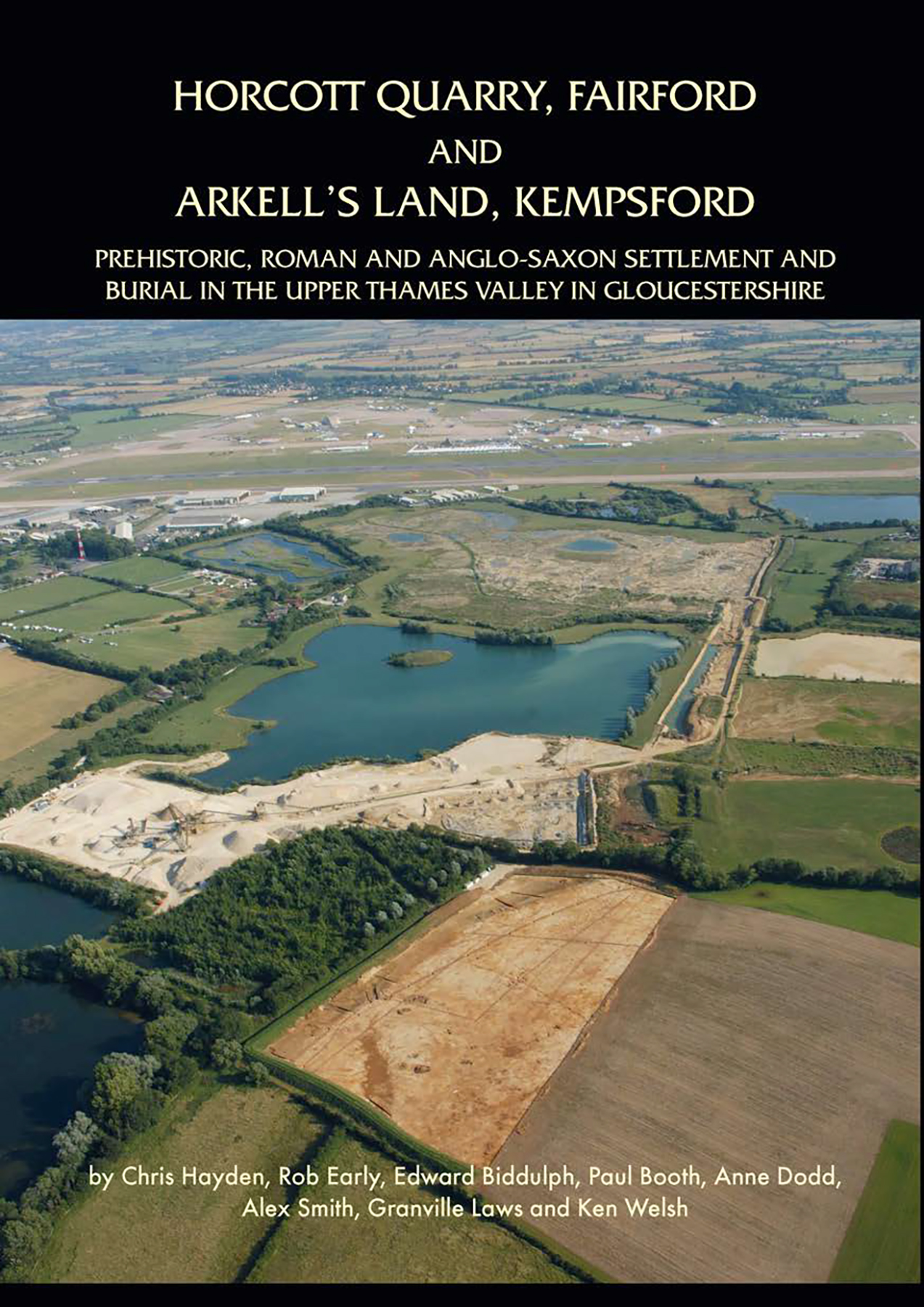
Download Sample PDF
H 304 x W 219 mm
552 pages
Published May 2017
ISBN
Hardback: 9781905905386
Keywords
gravel quarry archaeology; prehistoric settlement; Roman occupation; landscape archaeology; excavation report; rural economy
Thames Valley Landscapes Monograph 40
Horcott Quarry, Fairford and Arkell’s Land, Kempsford
Prehistoric, Roman and Anglo-Saxon Settlement and Burial in the Upper Thames Valley in Gloucestershire
By Chris Hayden, Rob Early, Edward Biddulph, Paul Booth, Anne Dodd

Hardback
£25.00
 Add to wishlist
Excavations at Horcott revealed Mesolithic activity, a major Iron Age settlement with exceptional grain‑storage structures, a Roman farmstead, a 3rd–4th‑century cemetery, and a large Anglo‑Saxon settlement. Nearby Arkell’s land saw only Roman‑period enclosures and fields, likely linked to Claydon Pike, and no later occupation.

Archaeopress Publishing Ltd
First and Second Floor
13-14 Market Square
Bicester
Oxfordshire OX26 6AD
United Kingdom
Tel +44 (0) 1865 311914 | fax +44 (0) 1865 512231 | email info@archaeopress.com
