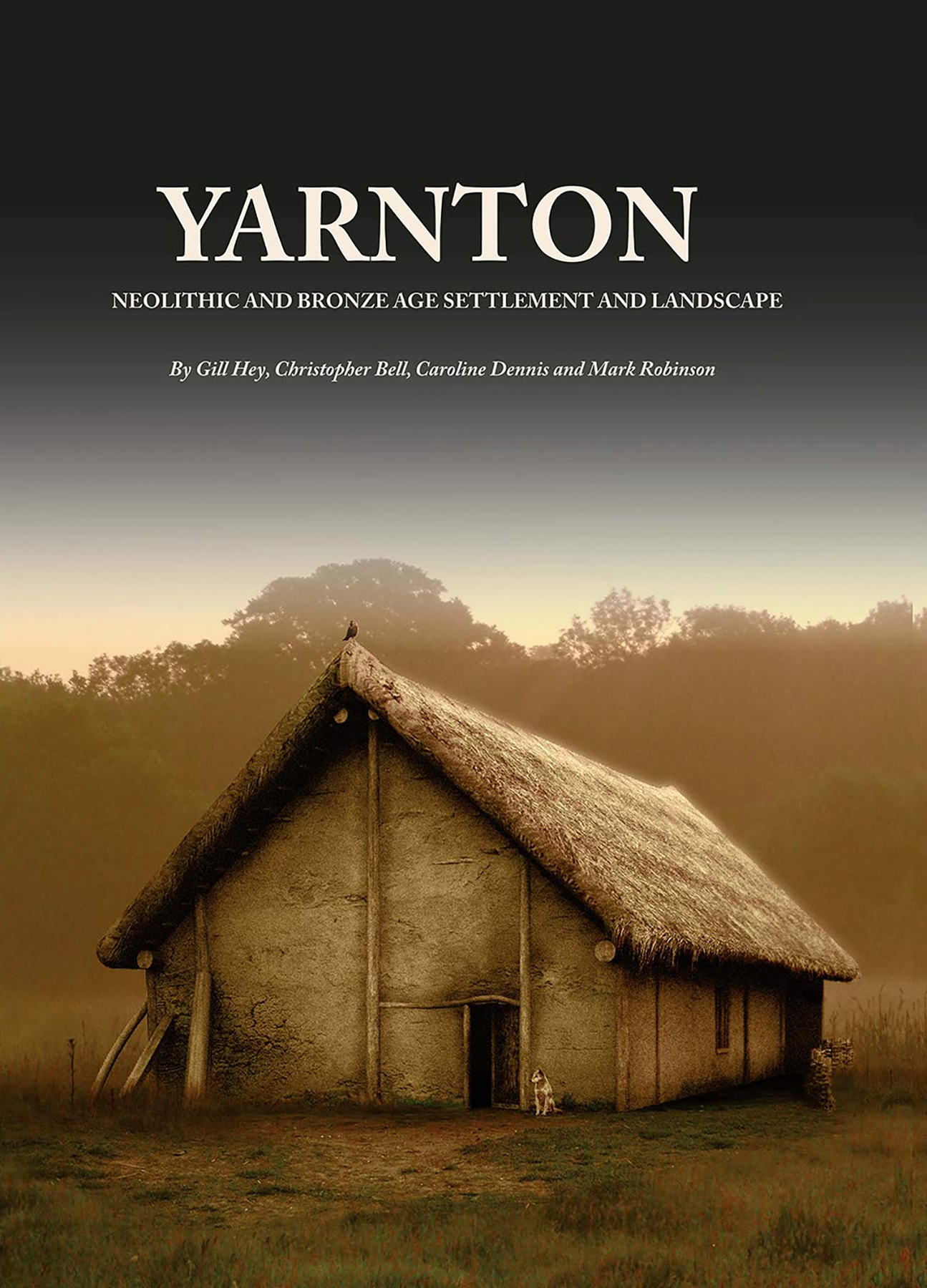
This volume reports Neolithic–Bronze Age discoveries at Yarnton–Cassington, including early houses, cremations, pits, monuments and evolving farming, craft and burial practices. The findings trace shifting settlement, landscape clearance and long-term environmental change across the Thames floodplain and gravel terrace.

This is the third in a series of three volumes reporting on a wide-ranging programme of fieldwork undertaken by Oxford Archaeology, mainly between 1989 and 1998, but also in 2005 and 2006, in and around the ARC (now Hanson UK) gravel extraction pit between Yarnton and Cassington, Oxfordshire. This landscape, extending from the floodplain of the Thames up onto the higher Summertown-Radley (Second) Gravel Terrace, has witnessed a long history of settlement and of topographic and vegetational change linked to human activity which extends up to the present day. This volume describes the remarkable discoveries of Neolithic and Bronze Age date; monographs on the Iron Age and Roman and the Saxon and medieval evidence have already been published (Hey et al. 2011; Hey 2004). Mesolithic hunter-gatherers had moved through this landscape leaving occasional flint tools, but it was only at the beginning of the Neolithic that there is evidence for sustained occupation in the area. A substantial rectangular post-built house was built at around 3800 cal BC, and evidence for cremation burial, pit digging and midden accumulation also belongs to this period. Pottery production, cereal cultivation, the rearing of domesticated animals and characteristic flint tools all demonstrate a fully Neolithic way of life. A small circular structure was built a little later, at c 3600 cal BC. Habitation continued throughout the middle and late Neolithic and the early Bronze Age but, with the exception of a possible late Neolithic building, this was represented by scatters and clusters of pits and some postholes. There was a pattern of persistent but short-lived settlement. Although farming continued, this was mainly focused on herding, and the quantities of cereals found declined. Many pits contained significant deposits, and the frequency with which these features were dug and the character of the remains that were put within them – the structure and formality with which they were placed – changed through time, perhaps indicating changing social concerns and beliefs. A number of small ceremonial and funerary monuments of this period were examined, mainly on the floodplain but also upon the Summertown- Radley Gravel Terrace, and the deposits associated with them support the suggestion that the area was visited repeatedly throughout this period. Burial practices, mainly represented throughout the Neolithic by cremated remains, changed at the beginning of the Bronze Age with the advent of Beaker-style burials; seven inhumations and a cremation burial were excavated. This flurry of burial activity was brief and in the 2nd and early 1st millennium, with the exception of a middle Bronze Age inhumation burial and two cremations, human remains were rarely deposited. Small quantities of cremated human bone, however, were found in pits from the early Neolithic to the middle Bronze Age. Activity in the Neolithic occurred in woodland clearings, but by the early Bronze Age the landscape had been substantially cleared of trees, and grazed grassland was the predominant vegetation type. Settlement in the Bronze Age was represented by small circular post-built structures, with associated domestic features, including waterholes, and these groups of features suggest single generation households. Evidence for cereal cultivation, rare in the Neolithic, became more common through the Bronze Age, although animal husbandry continued to be of primary importance. With widespread clearance came a rise in water levels and the floodplain became increasingly waterlogged. Occupation of the final Bronze Age was present on the floodplain, including a small household situated within a Neolithic ditched enclosure, but increased use of the Summertown-Radley Gravel Terrace at this time was evidenced by pottery finds, a small number of pits and two burnt mounds. Throughout this period, finds demonstrate the range of craft activities undertaken, from potting and flint and stone tool production to