Thames Valley Landscapes Monograph 36
Under the Oracle
Excavations at the Oracle Shopping Centre Site 1996-8 : The Medieval and Post-Medieval Urban Development of the Kennet Floodplain in Reading
By Ben M. Ford, Daniel Poore, Ruth Shaffrey, David R. P. Wilkinson

Hardback
£25.00
Add to basket
 Add to wishlist
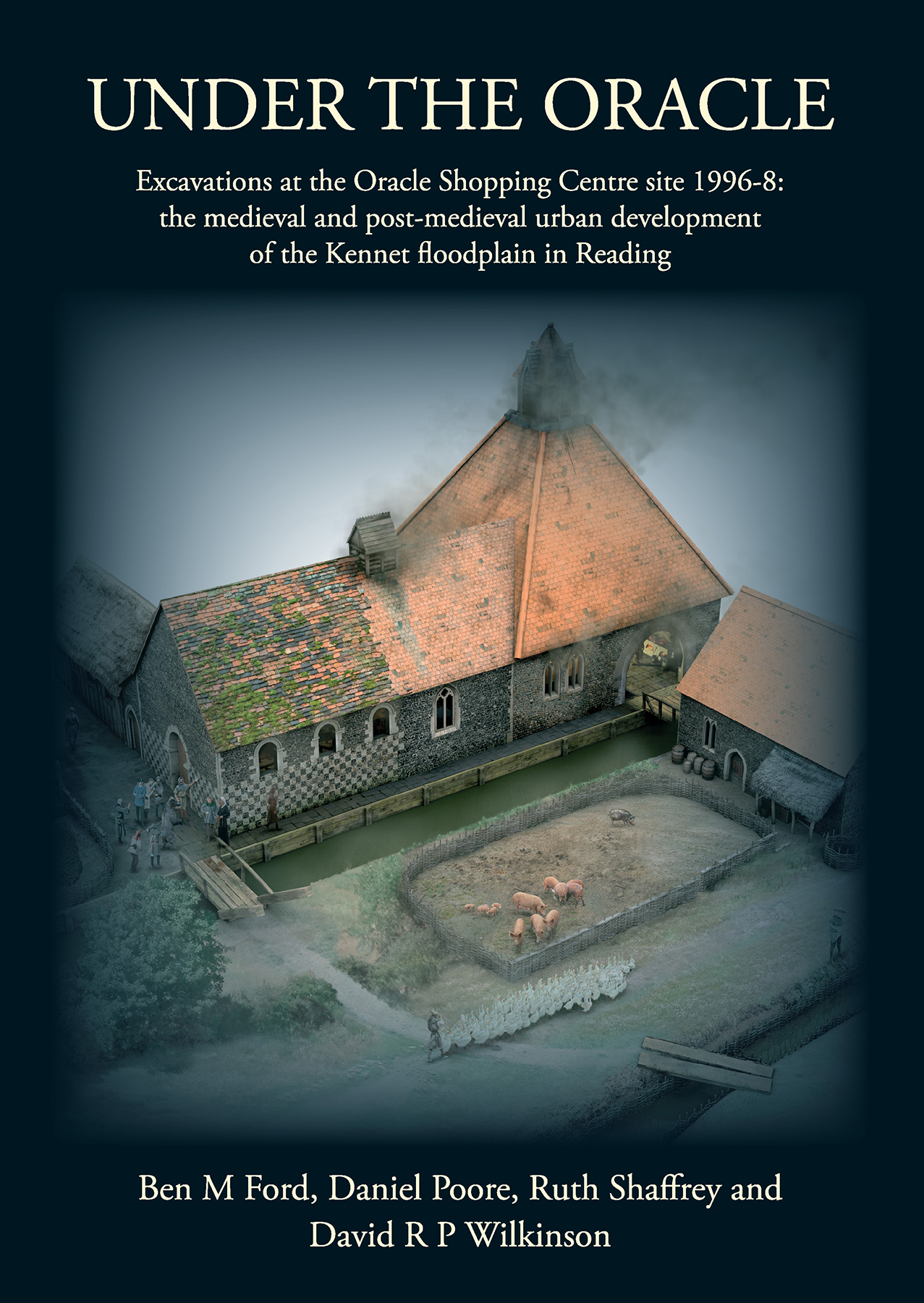
Excavations for the Oracle development in Reading uncovered 11th–12th‑century minster buildings, a large medieval cookshop, tanning pits, craftworking areas, and major mill complexes with well‑preserved machinery. Finds ranged from medieval pottery and leatherwork to Reading’s largest clay‑pipe assemblage.
READ MORE
Between April 1996 and August 1998, Oxford Archaeology carried out extensive archaeological investigations in advance of the development of the Oracle shopping and leisure complex in central Reading. The area investigated covered some 8 hectares on the floodplain of the river Kennet, immediately south of the town centre, with five key excavations targeted on the earliest known historic buildings, water channels and mills. A long sequence of development at the edge of the floodplain was identified at site 29, starting with timber buildings that may have formed part of the minster of St Mary’s during the late 11th and early 12th centuries. During the 12th century an elaborate stone building containing many large hearths and ovens was built on the site, and greatly extended during the later 13th century. It is suggested that this may have been a cookshop belonging to Reading Abbey. During the 16th century the site was in use as a tannery, and the excavations located numerous rows of tanning pits and vats and associated structures. The Oracle workhouse was constructed on the site in the early 17th century, and results from the OA excavations add to existing knowledge of the 200-year development and use of this building from documentary and cartographic sources. Site 150 investigated the historically attested Minster Mill. Remains from grain and malt processing of probable 12th century date were excavated, and evidence was recorded for management remains found were associated with the rebuilding of the mill in timber and brick during the 17th and 18th centuries. The development of the floodplain for craftworking and industry was studied at site 12, where active management of the river channels accompanied the construction and use of a sequence of waterfronts, structures for industrial processes and tanning pits. Following extensive land reclamation during the 16th century, the building later known as the Yield Hall was constructed on the site. The excavations traced the development of this house in detail over a period of mixed domestic and craft use during the 17th and 18th centuries, until its incorporation in Wilders Iron Foundry during the 19th. Excavations at site 101 revealed the progressive southwards migration, management and varied uses of the historically attested channel known as the Back Brook. South of the Kennet site 300 investigated the historically attested St Giles, or Town, mill. Important remains of the medieval mill were recovered, including a complete pitwheel of 12th century type, along with other early elements of the mill’s machinery. Extensive remains survived of a timber mill frame installed in the early 14th century and the timber revetments installed and repaired throughout the medieval period in the channels carrying water to and from the mill itself. Substantial remains were also recovered from major extensions of the mill during the 18th century and its conversion to steam power during the 19th. A programme of endrochronological dating was undertaken on numerous timbers recovered from the waterlogged conditions of the site, allowing unusually precise dating of certain structural elements. Amongst large collections of finds, those of particular interest include the medieval pottery, shoes, leatherworking and cobbling waste, glass vessels and a small number of fragments of textile. In addition, the recovery of the largest group of clay pipes yet found in Reading has allowed the development of a bowl-form typology for the town.