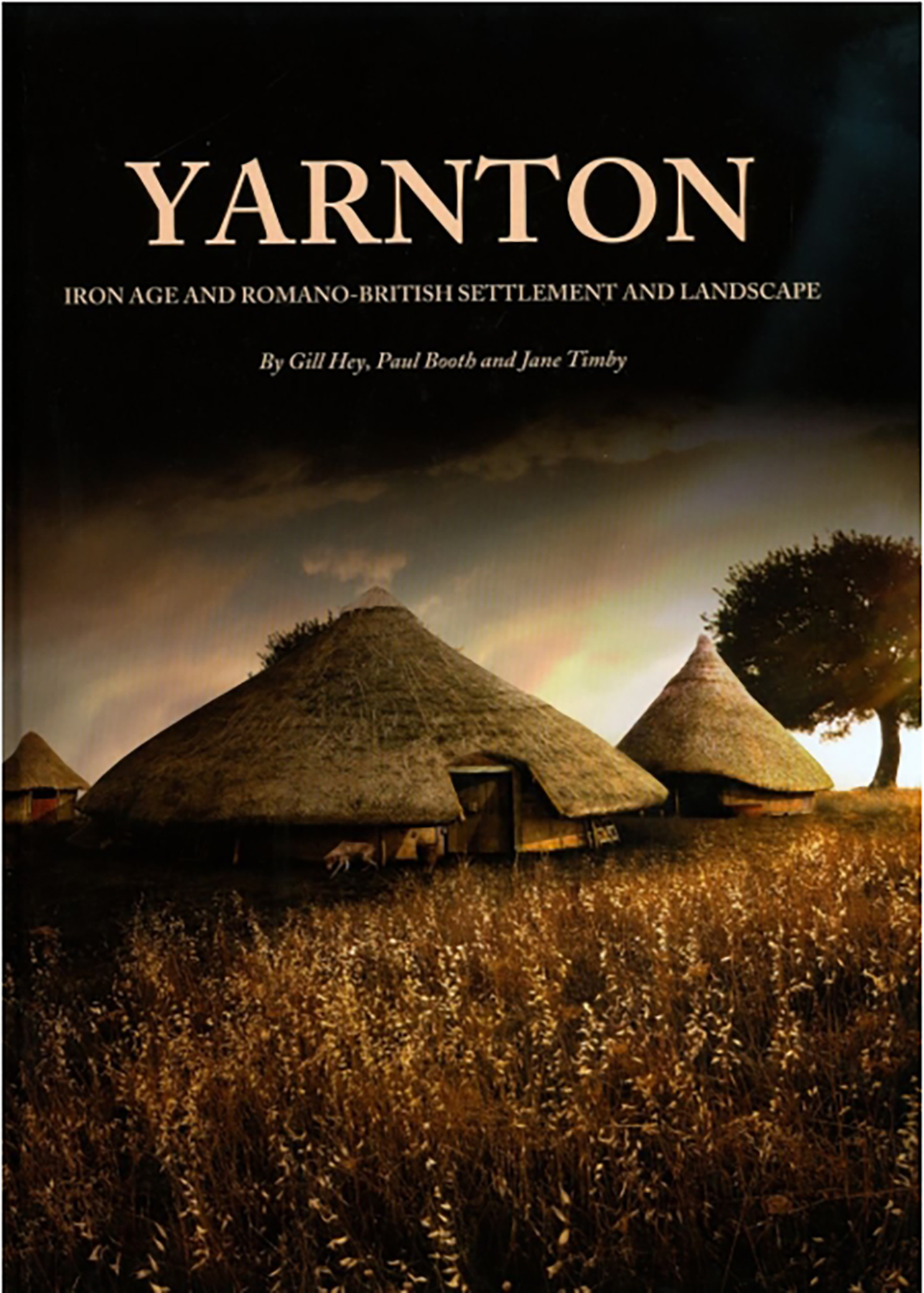
The second Yarnton volume reports Iron Age and Romano-British settlement and landscape evidence from excavations between 1990 and 1998. It traces occupation, field systems and changing land use on the Thames Valley gravel terraces near Yarnton and Cassington.
This is the second in a series of three volumes reporting on a wide-ranging programme of fieldwork undertaken by Oxford Archaeology, mainly between 1989 and 1998, in and around the ARC (now Hanson) gravel extraction pit lying between Yarnton and Cassington, Oxfordshire. This landscape, stretching from the floodplain to the Second Gravel Terrace of the Thames valley, has witnessed human activity from the Neolithic to the present day, although earlier prehistoric occupation concentrated on the floodplain, to be the subject of a separate volume on Neolithic and Bronze Age settlement and landscape (Hey et al. forthcoming). At the end of the Bronze Age/beginning of the Iron Age the floodplain at Yarnton appears to have been abandoned for settlement, although small middle Iron Age occupation sites are known on the Cassington floodplain in the south-west of the study area. Small and permanently-occupied settlements were established on the edge of the Second Gravel Terrace overlooking the low-lying ground at this time, to the west at Worton, and at Yarnton. The latter site, with two adjacent components (known as Yarnton and Cresswell Field), was occupied throughout the Iron Age and Roman periods, and it is the excavation of these sites and examination of their surrounding landscape which form the subject of this volume. Evidence for Saxon and medieval settlement has already been published (Hey 2004). The Yarnton and Cresswell Field terrace site may have been the home of only two or three families, the focus of use gradually shifting to the east through the Iron Age and Roman periods. Post-built buildings of round, D-shaped and four-post plan were all present in the Iron Age, and houses were increasingly surrounded by gullies from the middle Iron Age. These structures included a possible early Iron Age shrine and a middle Iron Age D-shaped smithy. Buildings were accompanied by extensive spreads of pits, of which about 1000 were identified. Associated with the middle Iron Age settlement was a small cemetery of some 35 crouched inhumation burials, rare for this period, which radiocarbon dating suggests were interred over a relatively short period during the third century BC. Further burials were made in the Roman period. The late Iron Age and Roman settlement at Yarnton was marked by repeatedly redefined ditched enclosures. Some of these may have been small paddocks suggesting intensive stock management, but domestic activity was widespread, although structural evidence was typically sparse. Ancillary structures included corndrying ovens and two pottery kilns of late 1st century AD date. The wider landscape context of these settlements was investigated by fieldwalking, geophysical survey and trench evaluation, revealing manuring scatters, field boundaries, ploughsoils and trackways. Former river channels on the floodplain were valuable sources of pollen and waterlogged macrobotanical and invertebrate remains important for reconstructing the landscape and changes in agricultural practice over time The floodplain was mainly used for grazing and parts of it were accessed by causeways built across palaeochannels in the middle Iron Age. Intensification of agriculture in the Roman period involved use of parts of the floodplain for arable, despite changing environmental conditions which eventually led to abandonment of these fields because of flooding, probably causing them to be relocated on higher ground. One of the middle Iron Age causeways was particularly carefully constructed, overlying a foundation deposit of a middle Bronze Age side-looped spearhead and other Bronze Age metal objects and incorporating unusual deposits of animal bone. Other special deposits, mainly of animal bone but including an iron adze head, were found in Iron Age pits on the settlement site. The later prehistoric and Romano-British community appears to have been small and selfsufficient and shows little in the way of exotic material culture. Substantial pottery asse


 Add to wishlist