
Publishing Scholarly Archaeology since 1997
Publishing Scholarly Archaeology since 1997
Log in | My Account | Basket Twitter Facebook LinkedIn
Advanced Search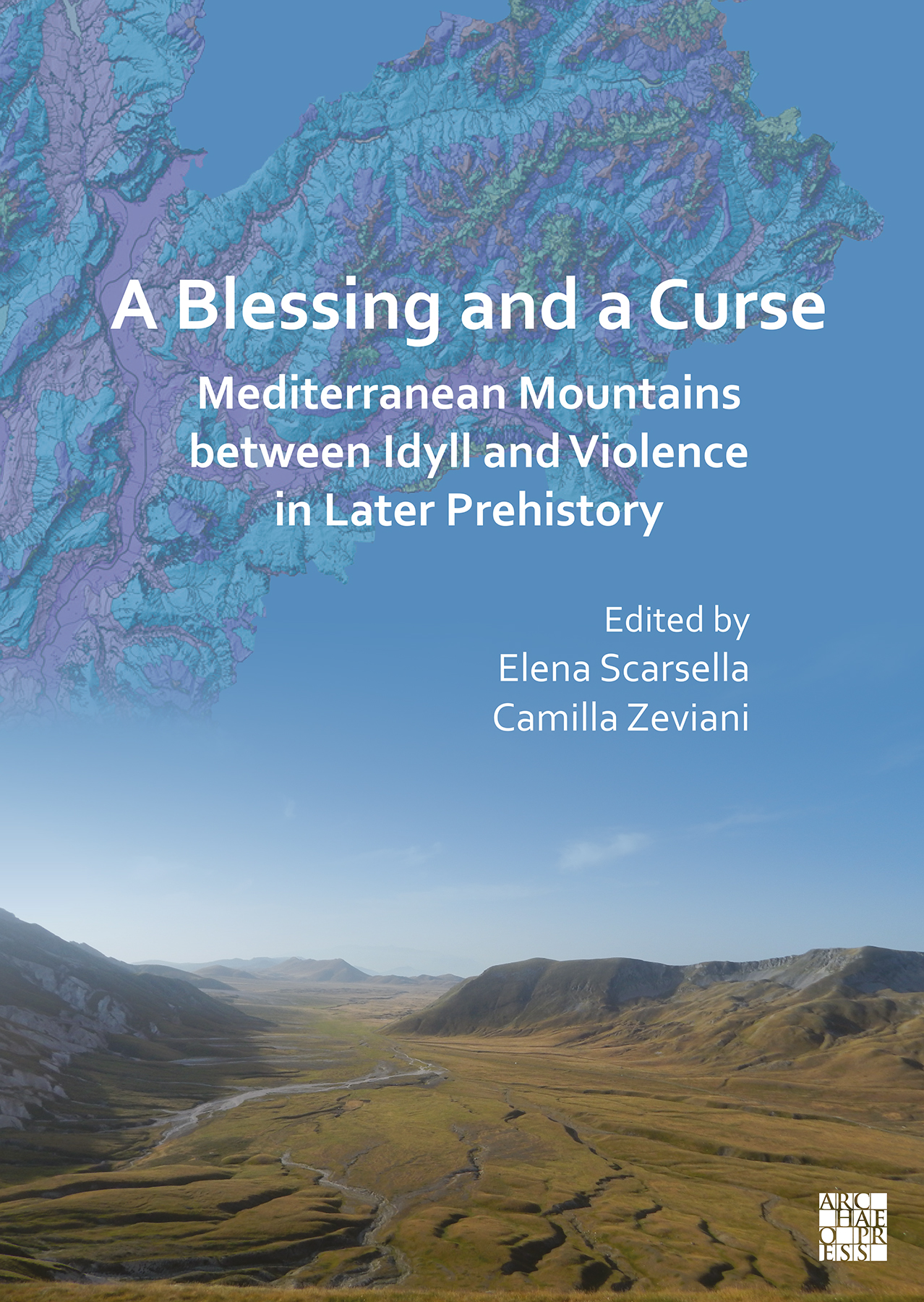
H 245 x W 174 mm
130 pages
30 figures, 9 tables (colour throughout)
Published Dec 2026
ISBN
Paperback: 9781805833888
Digital: 9781805833895
Keywords
Mountains; Landscape archaeology; Mediterranean; Resilience; Identity
Related titles


A Blessing and a Curse: Mediterranean Mountains between Idyll and Violence in Later Prehistory
Edited by Elena Scarsella, Camilla Zeviani

Paperback
£35.00
 Add to wishlist
This book explores mountain societies in later European prehistory through case studies from across the Mediterranean. Challenging stereotypes of mountain life, it examines how communities adapted to diverse and demanding environments, highlighting their resilience, mobility and varied cultural responses.
Contents
List of Figures and Tables
Preface
Framing Identity(es): the role of mountains in the Mediterranean landscape – Elena Scarsella, Camilla Zeviani
The Mountains of Western Boeotia: line of defence, border, or cage of the Mycenaean Polity of Orchomenos? – Stefano Ruzza
Point Process modelling of human-landscape relations during the Protopalatial and Neopalatial periods in the Lasithi plateau, East Crete – Adriana-Maria Xenaki
Cultural Entanglements in the Iron Age pre-Alpine Veneto (Italy): the case of the Magré group – Luigi Magnini, Anna Michielin, Cinzia Bettineschi
Tracking the track: pathway analysis in the Valsugana mining district for the reconstruction of Bronze Age routes – Stefano Pedersoli, Armando De Guio, L. Magnini
Questioning the marginality of mountain areas: the territory of Nursia during the Iron age 60 – Dario Monti
Agency of ritualised landscapes: the upper reaches of Gubbio – Marianna Negro
Geomorphological history of a Bronze Age site in the Nebrodi Mountains of Sicily – Gian Battista Marras, Andrea Eros Leandro Arena
TROINA: the crossroads of inland Sicily. The foundations of history from the Simeto to the Nebrodi – Simon Stoddart, Gianbattista Marras, Matthew Fitzjohn and Caroline Malone
People in the uplands. Transitability and agrarian practices in southeastern Iberia during the Iberian Iron Age – Susana González Reyero, Miriam Alba Luzón
Endnote: Where are we going from here?
About the Author
Elena Scarsella studied at La Sapienza, University of Rome, as an undergraduate and masters student in Later Prehistory. She is currently studying for her PhD at the University of Cambridge, Department of Archaeology, with a thesis on the mountain societies of Central Italy. Her main interest is the relationship between violence, identity and landscape in later prehistory. She has been Field Director of the Fossa Project in 2021 and co-coordinator of the Garrod Seminar Lectures series in Cambridge in 2022. She is currently involved in an exchange with the Ludwig-Maximilians-Universität in Munich, where she is a visiting scholar.
Camilla Zeviani completed her undergraduate degree at the Università di Padova and her MPhil at the University of Cambridge. Both of her dissertations focused on family identity construction and maintenance; the first within the Iron Age Golasecca Culture of north-west Italy, the second related to the late Etruscan communities of north-eastern Etruria. She is now completing her PhD studies at Cambridge, researching landscape and settlement patterns, as well as urban-hinterland relations, at several Etruscan central places between the 7th and the 6th centuries BC. She is collaborating with the University of Kiel on several multidisciplinary and comparative projects, comparing the settlement patterns and landscape organisation during the Iron Age of Etruria, southern Germany and Denmark.
Archaeopress Publishing Ltd
First and Second Floor
13-14 Market Square
Bicester
Oxfordshire OX26 6AD
United Kingdom
Tel +44 (0) 1865 311914 | fax +44 (0) 1865 512231 | email info@archaeopress.com
