
Publishing Scholarly Archaeology since 1997
Publishing Scholarly Archaeology since 1997
Log in | My Account | Basket Twitter Facebook LinkedIn
Advanced Search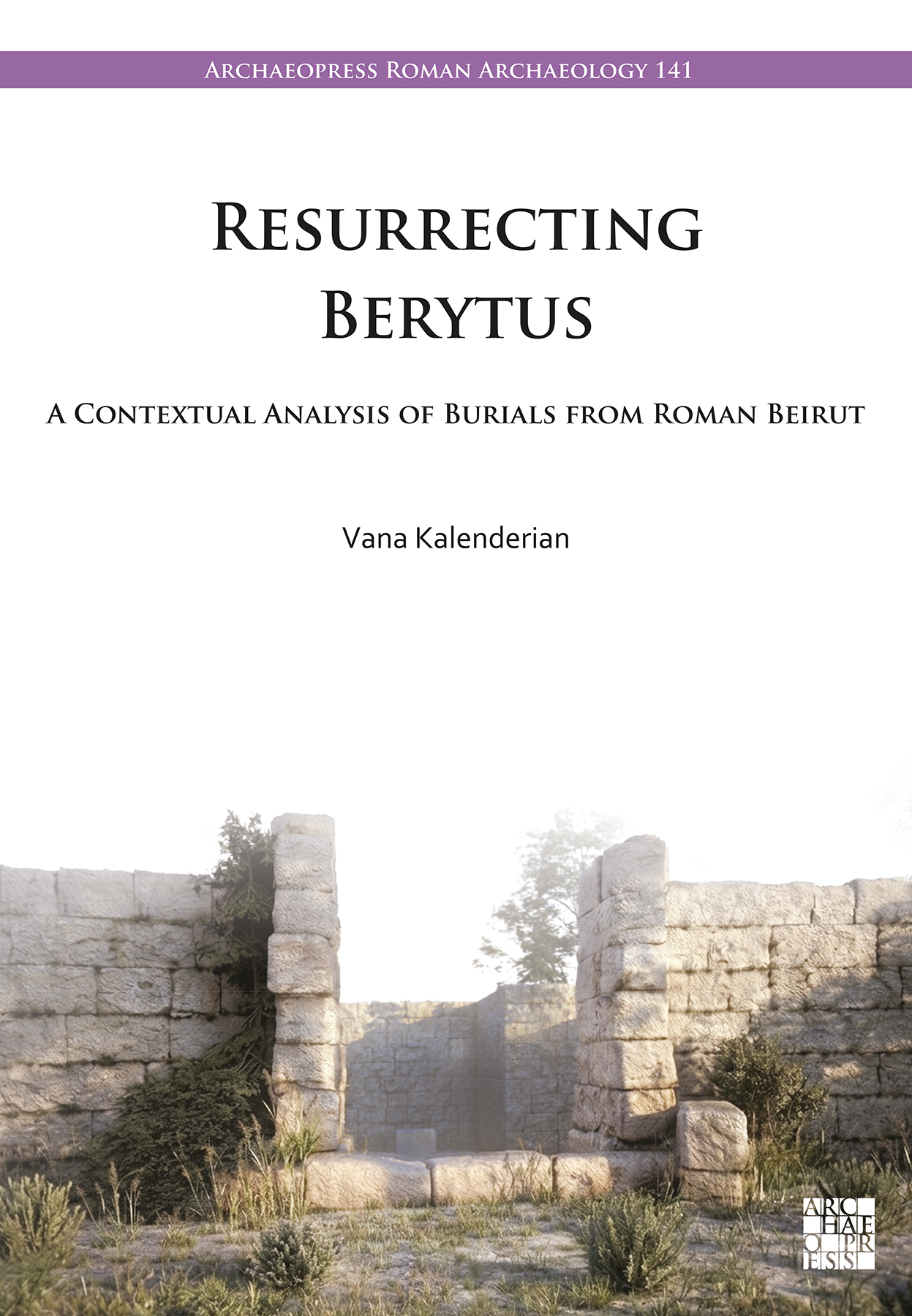
Download Sample PDF
H 290 x W 205 mm
384 pages
264 figures, 142 tables, 5 plates (colour throughout)
Published Oct 2026
ISBN
Hardback: 9781805833222
Digital: 9781805833239
Keywords
Mortuary Archaeology; Bioarchaeology; Migration; Mobility; Roman Colonization; Roman Near East
Related titles


Archaeopress Roman Archaeology 141
Resurrecting Berytus
A Contextual Analysis of Burials from Roman Beirut

Hardback
£75.00
Includes PDF
PDF eBook
(personal use)
£16.00
PDF eBook
(institutional use)
£75.00
 Add to wishlist
This book examines burial practices in Roman Berytus (modern Beirut) from the 1st century BC to the 4th century AD. Using archaeological, osteological and isotopic evidence, it explores identity, migration, social status and cultural change, revealing how Roman colonialism shaped life, death and tradition in the eastern Mediterranean.
Contents
List of Figures and Plates
List of Tables
Acknowledgements
Glossary of Terms and Abbreviations
PART I INTRODUCING THE STUDY
Chapter 1: Introduction
Chapter 2: Historical Background
PART II MATERIAL AND METHODS
Chapter 3: The Dataset
Chapter 4: Methodology
PART III INTRA-SITE ANALYSIS
Introduction to Part III
Chapter 5: SFI 655
Chapter 6: RML 2385
Chapter 7: SFI 645
Chapter 8: MDWR 02
Chapter 9: ASH 163
Chapter 10: MDWR 466/468
Chapter 11: ASH 002
PART IV INTER-SITE ANALYSIS
Introduction to Part IV
Chapter 12: The Buried Cohort: Makeup of the Berytian Assemblage
Chapter 13: The Physical Body within the Grave
Chapter 14: The Burial Grounds
Chapter 15: Burial Architecture
Chapter 16: Spatial Organization of the Burial Grounds
Chapter 17: Grave Goods
Chapter 18: Migration and Mobility: Isotope Analysis
PART V CONCLUSIONS
Chapter 19: Contextualizing the Findings
Chapter 20: Conclusion
Plates
Appendices
References
About the Author
Vana Kalenderian trained in Human Osteoarchaeology at the University of Edinburgh and Mortuary Archaeology at the University of Groningen. She specialises in the interdisciplinary analysis of ancient mortuary practices with a focus on the Roman period. Her research integrates the archaeological sciences – including osteology, isotope analysis, and radiocarbon dating – with the contextual study of funerary material culture. Experienced in all stages of burial archaeology – from fieldwork to laboratory analysis – Vana remains actively engaged in Lebanese archaeology, and her work has been published in both local and international journals. She currently serves as the human bone specialist on a rescue excavation in northern Lebanon with the National Council for Scientific Research and the Directorate General of Antiquities. She is also a lecturer in archaeology at the American University of Beirut.
Archaeopress Publishing Ltd
First and Second Floor
13-14 Market Square
Bicester
Oxfordshire OX26 6AD
United Kingdom
Tel +44 (0) 1865 311914 | fax +44 (0) 1865 512231 | email info@archaeopress.com
