
Publishing Scholarly Archaeology since 1997
Publishing Scholarly Archaeology since 1997
Log in | My Account | Basket Twitter Facebook LinkedIn
Advanced Search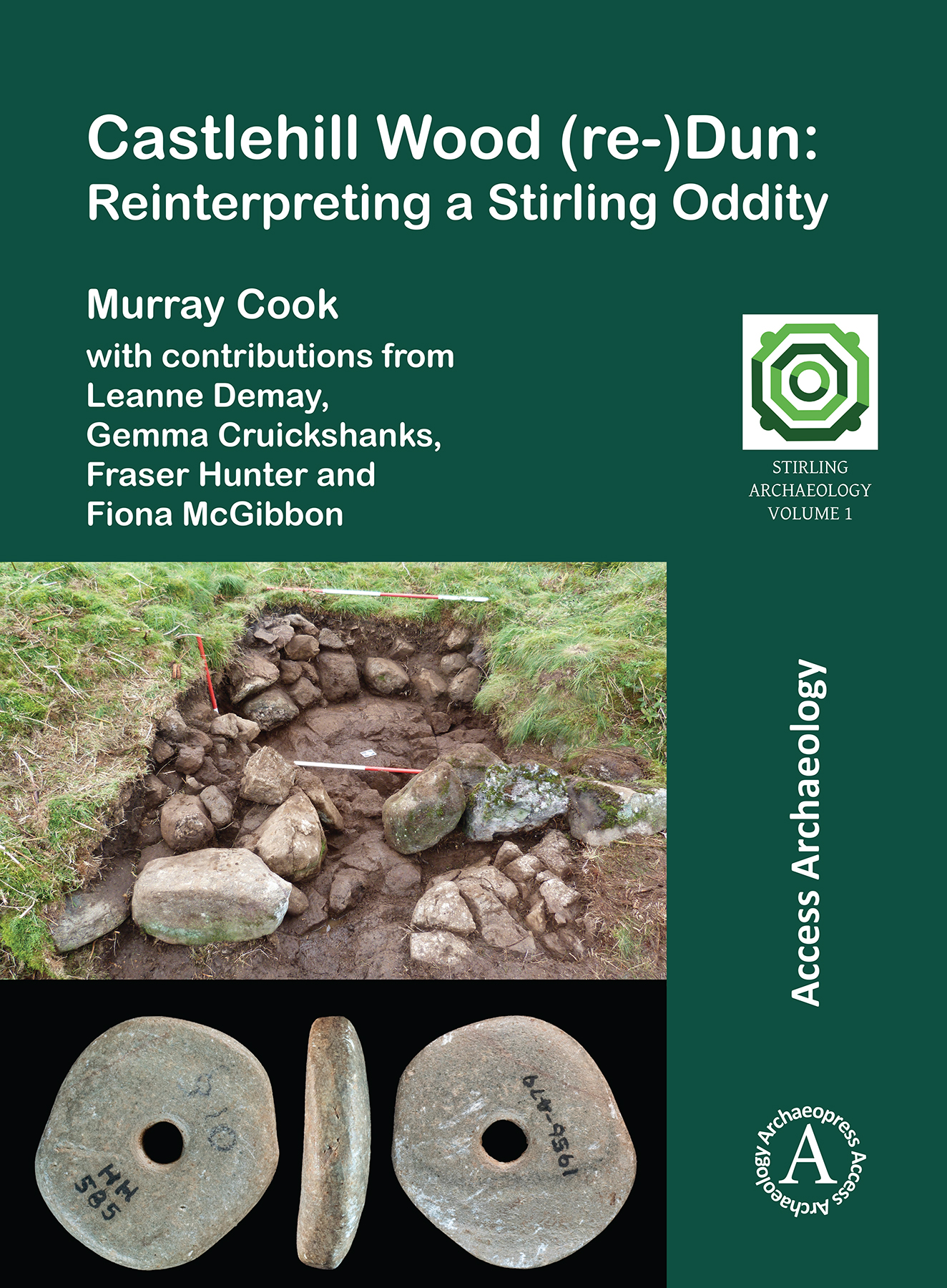
Download Sample PDF
H 276 x W 203 mm
62 pages
44 figures, 4 tables (colour throughout)
Published Jun 2026
Archaeopress Access Archaeology
ISBN
Paperback: 9781805833000
Digital: 9781805833017
Keywords
Castlehill Wood; Iron Age; Roman; Dun
Related titles


Castlehill Wood (re-)Dun: Reinterpreting a Stirling Oddity
Stirling Archaeology Volume 1
By Murray Cook

Paperback
£22.00
Includes PDF
PDF eBook
(personal use)
Free Download
PDF eBook
(institutional use)
£9.99
 Add to wishlist
This paper reinterprets Feachem’s 1950s excavation of Castlehill Wood dun, revealing a roofed pre‑Roman structure with cells and galleries linked to wider Iron Age architectural and ritual traditions. It also republishes artefact reviews from West Plean Homestead and Gallow Hill, clarifying Stirling’s complex settlement history.
Contents
Introduction
Location and Background
Results
Discussion
Conclusion
Acknowledgments
Appendix 1: A Re-Assessment of Artefacts from West Plean Homestead – Gemma Cruickshanks and Fraser Hunter
Appendix 2: A Roman Lava Quern from an Iron Age Site at Gallow Hill, Stirling – Fraser Hunter and Gemma Cruickshanks
References
About the Author
Murray Cook graduated from the archaeology department in Edinburgh in 1995 and has since worked across Northern Britain in a variety of roles in commercial and curatorial archaeology. He is currently employed as Stirling Council’s Archaeologist giving archaeological advice to Stirling, Clackmannanshire, Falkirk and North Lanarkshire Councils. In 2015 he gained a PhD from Edinburgh for a study of the later prehistoric settlement record of the Don Valley in Aberdeenshire, combining key-hole excavation with commercial mitigation excavations.
He has conducted research excavations into later prehistoric settlement sites in Stirling, East Lothian and Aberdeenshire and is the co-founder and co-director of Rampart Scotland, an archaeological field school. He regularly hosts student placements and is keen to hear from interested individuals.
He is passionate about public engagement with archaeology and regularly runs free excavations, walks, lectures and other active engagement with the public, the details of which are presented in a regular and informal blog called Stirling Archaeology.
Archaeopress Publishing Ltd
First and Second Floor
13-14 Market Square
Bicester
Oxfordshire OX26 6AD
United Kingdom
Tel +44 (0) 1865 311914 | fax +44 (0) 1865 512231 | email info@archaeopress.com
