
Publishing Scholarly Archaeology since 1997
Publishing Scholarly Archaeology since 1997
Log in | My Account | Basket Twitter Facebook LinkedIn
Advanced Search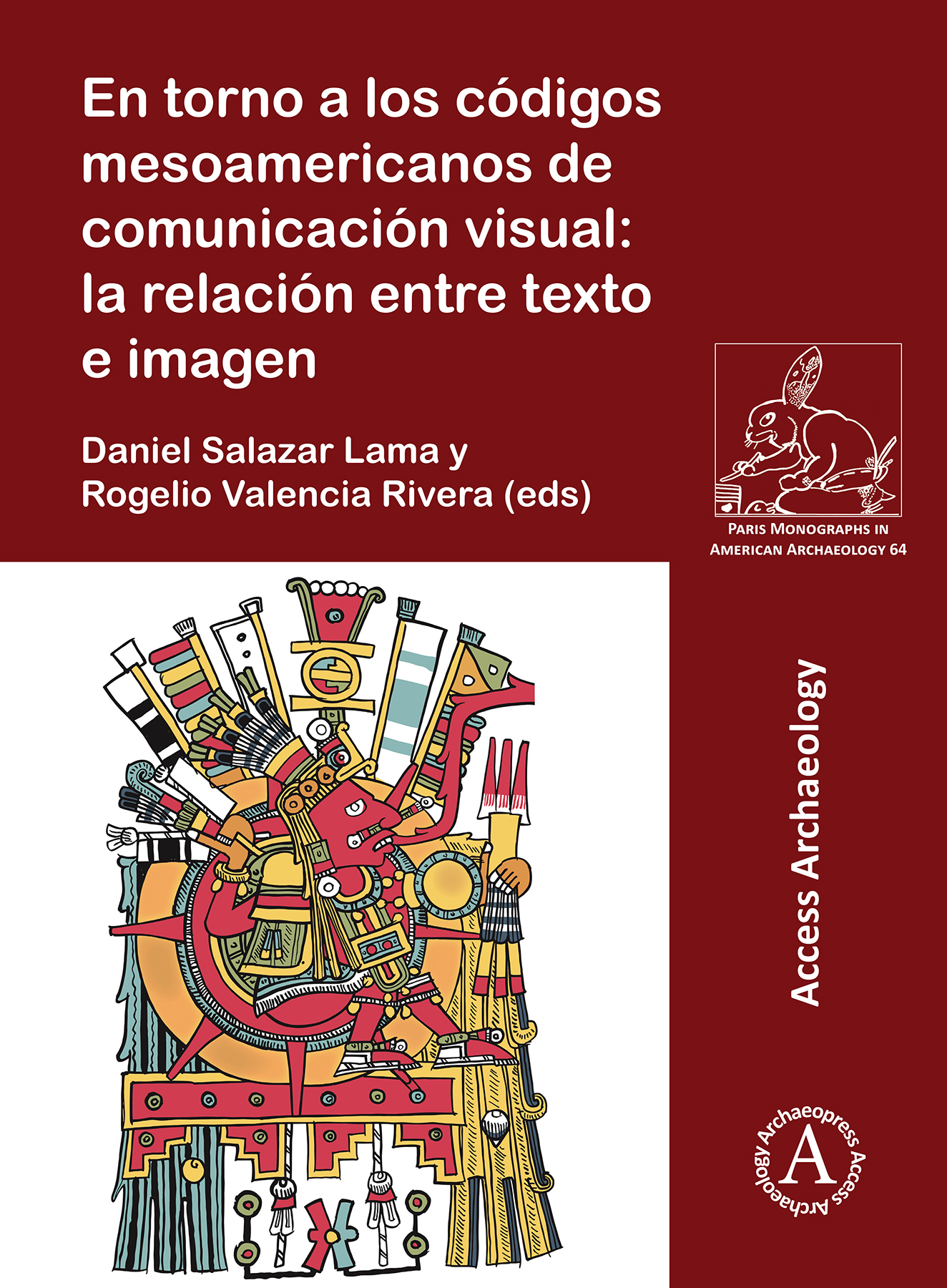
Download Sample PDF
H 276 x W 203 mm
158 pages
80 figures (colour throughout)
Spanish text
Published Apr 2026
Archaeopress Access Archaeology
ISBN
Paperback: 9781805832652
Digital: 9781805832669
Keywords
Pre-Columbian Americas; Maya; Writing Systems
Related titles


Paris Monographs in American Archaeology 64
En torno a los códigos mesoamericanos de comunicación visual: la relación entre texto e imagen
Edited by Daniel Salazar Lama, Rogelio Valencia Rivera

Paperback
£30.00
Includes PDF
PDF eBook
(personal use)
Free Download
PDF eBook
(institutional use)
£9.99
 Add to wishlist
An interdisciplinary study of Mesoamerican visual communication, exploring the relationship between text and image across Maya and central Mexican traditions. Drawing on new research, it reinterprets graphic systems, their meanings, and the visual thinking underlying them.
Contents
Introducción – Daniel Salazar Lama y Rogelio Valencia Rivera
Image in Text: The Pictorial Aspect of Mesoamerican Writing Systems and the Long History of Typological Misconceptions – Harri Kettunen
Emblemas de la serpiente de guerra: Explorando los límites entre escritura e iconografía maya en la cerámica estilo Códice – Daniel Salazar Lama, Rogelio Valencia Rivera, Davide Domenici
Las expresiones implícitas de la personificación de dioses en textos e imágenes mayas del periodo Clásico – Felix Kupprat
El uso de determinativos semánticos en la iconografía maya como mecanismo denotativo y connotativo de la imagen – Rogelio Valencia Rivera
Los ojos como un lugar para el significado. Signos y textos oculares en la iconografía maya – Daniel Salazar Lama
Nombres de dioses codificados en sus imágenes en el códice borgia y otros códices adivinatorios – Katarzyna Mikulska
About the Author
Daniel Salazar Lama is a specialist in Mayan iconography and art history, with a particular focus on sculpture integrated into architecture from the Pre-Classical and Classical periods, as well as on mural painting and sculpted monuments. His research combines historical and artistic analysis with the use of advanced recording technologies and virtual archaeology, aimed at heritage conservation, archaeological research and the production of educational and museographic resources. He holds a Master’s degree (2014) and a PhD (2019) in Mesoamerican Studies from the National Autonomous University of Mexico. He currently works as a full-time researcher at Archaïos (Paris), a research associate at the Centre for Mexican and Central American Studies (CEMCA, Mexico) and a visiting researcher on various projects at the Archéologie des Amériques laboratory (CNRS). He has widely disseminated the results of his research at international conferences and in specialist and popular science journals. His recent publications include several articles on the iconography of Calakmul (derived from the research project he currently leads), a monograph on the Balamkú frieze, a revised version of which is due to be published shortly in the Paris Monographs in American Archaeology series (Archaeopress), and the present volume, which brings together various studies on Mesoamerican writing systems.
Rogelio Valencia Rivera holds a Master's degree in Science from the Universidad Politécnica de Madrid and a PhD in History specializing in American Anthropology from the Faculty of Geography and History at the Universidad Complutense de Madrid. He has been part of the Calakmul Archaeological Project as an epigrapher since 2008. He specializes in Maya and Mesoamerican epigraphy, iconography, history and religion, with a focus on the study of the writing systems of the region and the analysis of the relationship between text and image in pre-Hispanic art. His most recent publications include: 'The Use of Semantic Determinatives in Nahuatl Writing', 'La representación del espacio en el arte maya y su aplicación a las pinturas de la Acrópolis de Chi’ik Nahb de Calakmul', 'Blessings for the Afterlife: Contextual Analysis of the Graffiti of Substructure II-B at Calakmul, Campeche, Mexico”, “The Deities of Glyph C of the Maya Lunar Series as the Patron Gods of the Phases of the Moon”, and the book “K'awiil. El dios maya del rayo, la abundancia y los gobernantes”.
en español
Daniel Salazar Lama es especialista en iconografía e historia del arte maya, con particular atención a la escultura integrada en la arquitectura de los periodos Preclásico y Clásico, así como a la pintura mural y a los monumentos esculpidos. Su labor de investigación articula el análisis histórico-artístico con el uso de tecnologías avanzadas de registro y arqueología virtual, orientadas a la conservación del patrimonio, la investigación arqueológica y la producción de recursos educativos y museográficos. Es maestro (2014) y doctor (2019) en Estudios Mesoamericanos por la Universidad Nacional Autónoma de México. Actualmente se desempeña como investigador de tiempo completo en Archaïos (París), investigador asociado del Centro de Estudios Mexicanos y Centroamericanos (CEMCA, México) e investigador invitado en diversos proyectos del laboratorio Archéologie des Amériques (CNRS). Ha difundido ampliamente los resultados de sus investigaciones en congresos internacionales y en revistas científicas especializadas y de divulgación. Entre sus publicaciones recientes destacan varios artículos dedicados a la iconografía de Calakmul (derivados del proyecto de investigación que actualmente dirige), una monografía sobre el friso de Balamkú, cuya versión revisada será próximamente publicada en la serie Paris Monographs in American Archaeology (Archaeopress), y el presente volumen, que reúne diversos estudios sobre los sistemas mesoamericanos de escritura.
Rogelio Valencia Rivera es Maestro en Ciencias por la Universidad Politécnica de Madrid y doctor en Historia con especialidad en Antropología Americana por la Facultad de Geografía e Historia de la Universidad Complutense de Madrid. Forma parte del Proyecto Arqueológico Calakmul como epigrafista desde el 2008. Está especializado en epigrafía, iconografía, historia y religión mayas y mesoamericanas, con énfasis en el estudio de los sistemas de escritura de dicha área y en el análisis de la relación entre texto e imagen en las representaciones plásticas prehispánicas. Entre sus publicaciones más recientes se encuentran: “The Use of Semantic Determinatives in Nahuatl Writing”, “La representación del espacio en el arte maya y su aplicación a las pinturas de la Acrópolis de Chi’ik Nahb de Calakmul”, “Blessings for the Afterlife: Contextual Analysis of the Graffiti of Substructure II-B at Calakmul, Campeche, Mexico”, “The deities of Glyph C of the Maya Lunar Series as the patron gods of the phases of the moon” y el libro “K’awiil. El dios maya del rayo, la abundancia y los gobernantes”.
Archaeopress Publishing Ltd
First and Second Floor
13-14 Market Square
Bicester
Oxfordshire OX26 6AD
United Kingdom
Tel +44 (0) 1865 311914 | fax +44 (0) 1865 512231 | email info@archaeopress.com
