
Publishing Scholarly Archaeology since 1997
Publishing Scholarly Archaeology since 1997
Log in | My Account | Basket Twitter Facebook LinkedIn
Advanced Search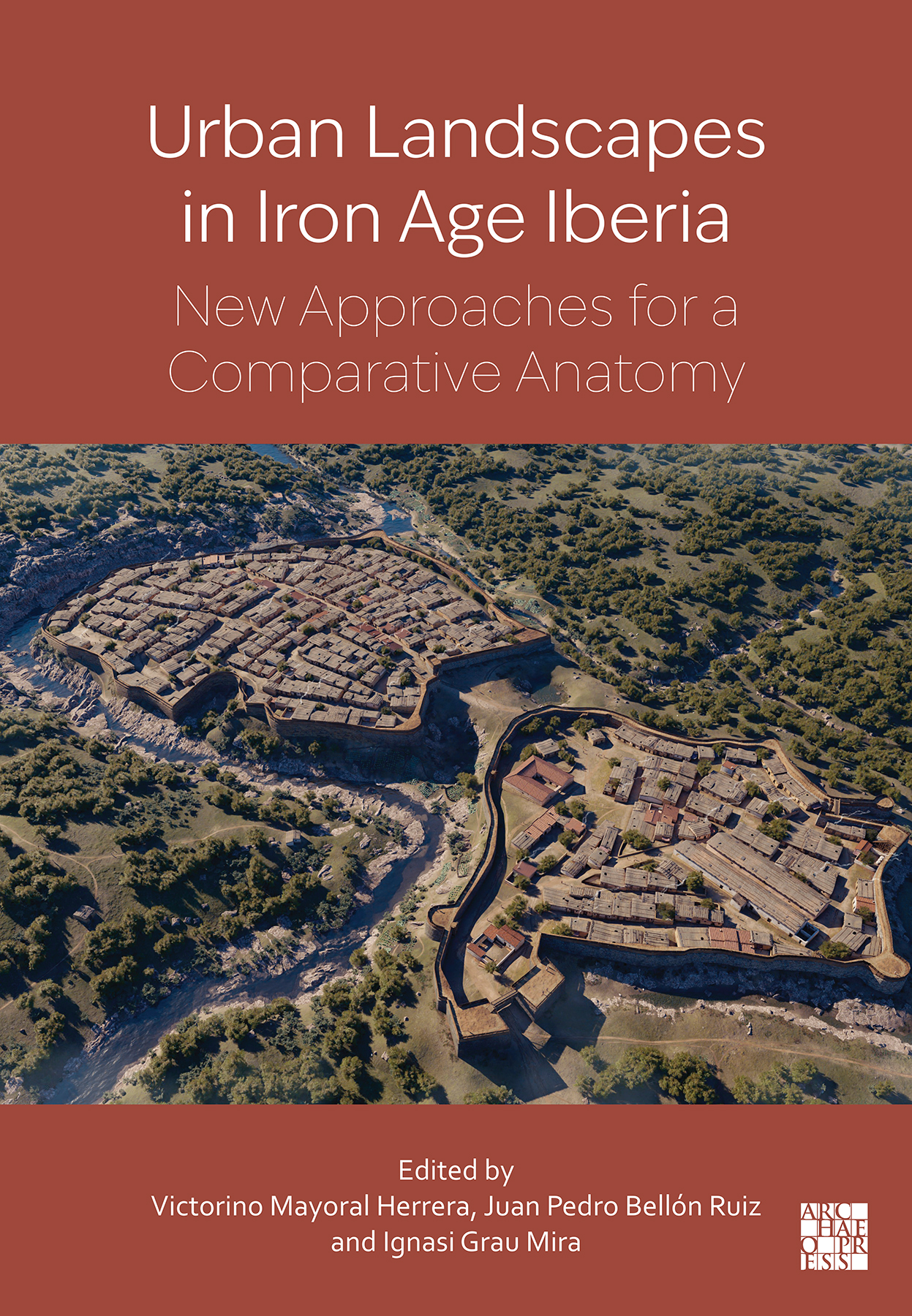
Download Sample PDF
H 290 x W 205 mm
226 pages
110 figures, 1 table (colour throughout)
Published Jun 2026
ISBN
Hardback: 9781805832072
Digital: 9781805832089
Keywords
Iron Age; Iberian Peninsula; Urbanism; Oppida; Hillforts
Related titles


Urban landscapes in Iron Age Iberia
New Approaches for a Comparative Anatomy
By Victorino Mayoral Herrera, Juan Pedro Bellón, Ignasi Grau Mira

Hardback
£60.00
Includes PDF
PDF eBook
(personal use)
£16.00
PDF eBook
(institutional use)
£60.00
 Add to wishlist
This volume synthesises Iron Age urbanism in Iberia, examining hillforts and oppida (4th–1st c. BC) through a multidisciplinary lens. It highlights diverse regional developments and alternatives to Mediterranean models, demonstrating Iberia’s key role in wider European urbanisation processes.
Contents
List of Figures and Tables
Foreword – Manuel Fernández-Götz
Chapter 1. Compared Anatomies, Compared Societies of the Iberian Iron Age throughout Archaeological Analysis – Victorino Mayoral Herrera, Ignasi Grau Mira and Juan Pedro Bellón Ruiz
Chapter 2. Iron Age Urbanism in the North-West of the Iberian Peninsula: New Challenges Provided by Non-Invasive Archaeology – David González-Álvarez, Vega Arribas-Greciano, Pastor Fábrega-Álvarez, Jesús García Sánchez, Rodrigo González-Camino, Samuel Nión-Álvarez, Carlos Otero-Vilariño and César Parcero-Oubiña
Chapter 3. Oppida-Based Social Organization in the Duero Valley during the Late Iron Age. A View on the Contribution of Non-Invasive Archaeology from Aerial Photography to Geoprospection – Jesús García Sánchez
Chapter 4. Iron Age Urban Landscapes in the Amblés Valley (Ávila) – Jesús Rodríguez-Hernández, Gonzalo Ruiz Zapatero and Jesús R. Álvarez-Sanchís
Chapter 5. Late Iron Age Hillforts and Oppida of the Middle Tagus Basin (Spain). A Comparative Anatomy – Victorino Mayoral, Carmen Pro, Elia Quirós and Maite de Tena
Chapter 6. The ‘Fornacis’ Project: Geophysical and Archaeometallurgical Survey – Alonso Rodríguez Díaz, Ignacio Pavón Soldevila and David M. Duque Espino
Chapter 7. Tejada la Vieja – Protohistoric Settlement Design Revealed by Ground-Penetrating Radar – Clara Toscano Perez, Cornelius Meyer and Roger Sala Bartrolí
Chapter 8. Hidden Anatomies: The Genesis and Development of the First Urban Network in the Lower Guadalquivir Valley – Francisco José García Fernández and Eduardo Ferrer Albelda
Chapter 9. Iron Age Iberian Urban Sites in the Guadalbullón River Valley: Iliturgi (Mengíbar, Jaén) and Puente Tablas (Jaén), Two Models of Archaeological Research – Carmen Rueda Galán, Juan Pedro Bellón Ruiz, Miguel Ángel Lechuga Chica, Arturo Ruiz Rodríguez, Manuel Molinos Molinos, Darío Garrido Almagro and María José Cabrera Lara
Chapter 10. Pathways to Urbanization. Aggregation and Social Organization in a Mediterranean Mountain Landscape during the Early Iron Age (Segura Basin, Inland Iberia) – Susana González Reyero, F. Javier Sánchez-Palencia Ramos and Miriam Alba Luzón
Chapter 11. Disentangling the Urban Settlements and Societies in the Iron Age of Eastern Iberia (450–200 BC) – Ignasi Grau Mira
Chapter 12. Non-Invasive Methods Applied to the Analysis of Urban Centres in North-Eastern Iberia during the Iron Age – Jaume Noguera, David Asensio, Roguer Sala, Judith Muñoz, Jordi Morer, Pau Menéndez, Rafel Jornet, David Jimeno, Borja Gil and Aureli Álvarez
Chapter 13. Social and Functional Characterisation of Urban Settlements in Northern Iberia during the Iron Age – David Asensio, Jaume Noguera, Gabriel de Prado, Ferrán Codina, Pau Menéndez, Jordi Morer, Rafel Jornet, Judith Muñoz, Joaquim Garcia Roselló, David Jimeno, Borja Gil and Aureli Álvarez
About the Author
Victorino Mayoral Herrera is a Tenured Scientist in the Mérida Institute of Archaeology (Spanish Council of Scientific Research-Government of Extremadura). He specializes in landscape archaeological studies, mainly focused on the Late Iron Age and early Roman period and the potential of non-invasive archaeology.
Juan Pedro Bellón is a Tenured Associate Professor of Archaeology at the University of Jaén (Department of Historical Heritage) and Researcher in the Institute of Iberian Archaeology of the University of Jaén. He is a specialist in conflict archaeology (Second Punic War), the archaeology of the Iberian Culture, the history of archaeology, Iron Age archaeology and landscape studies.
Ignasi Grau Mira is a Full Professor of Archaeology in the Department of Prehistory, Archaeology, Ancient History and Classics at the University of Alicante, where he is also a researcher at the Institute for Research in Archaeology and Historical Heritage (INAPH). He specialises in landscape archaeology linked to social organisation and dynamics, principally in the ancient Mediterranean but also working in South America and Oceania.

Archaeopress Publishing Ltd
First and Second Floor
13-14 Market Square
Bicester
Oxfordshire OX26 6AD
United Kingdom
Tel +44 (0) 1865 311914 | fax +44 (0) 1865 512231 | email info@archaeopress.com
