
Publishing Scholarly Archaeology since 1997
Publishing Scholarly Archaeology since 1997
Log in | My Account | Basket Twitter Facebook LinkedIn
Advanced Search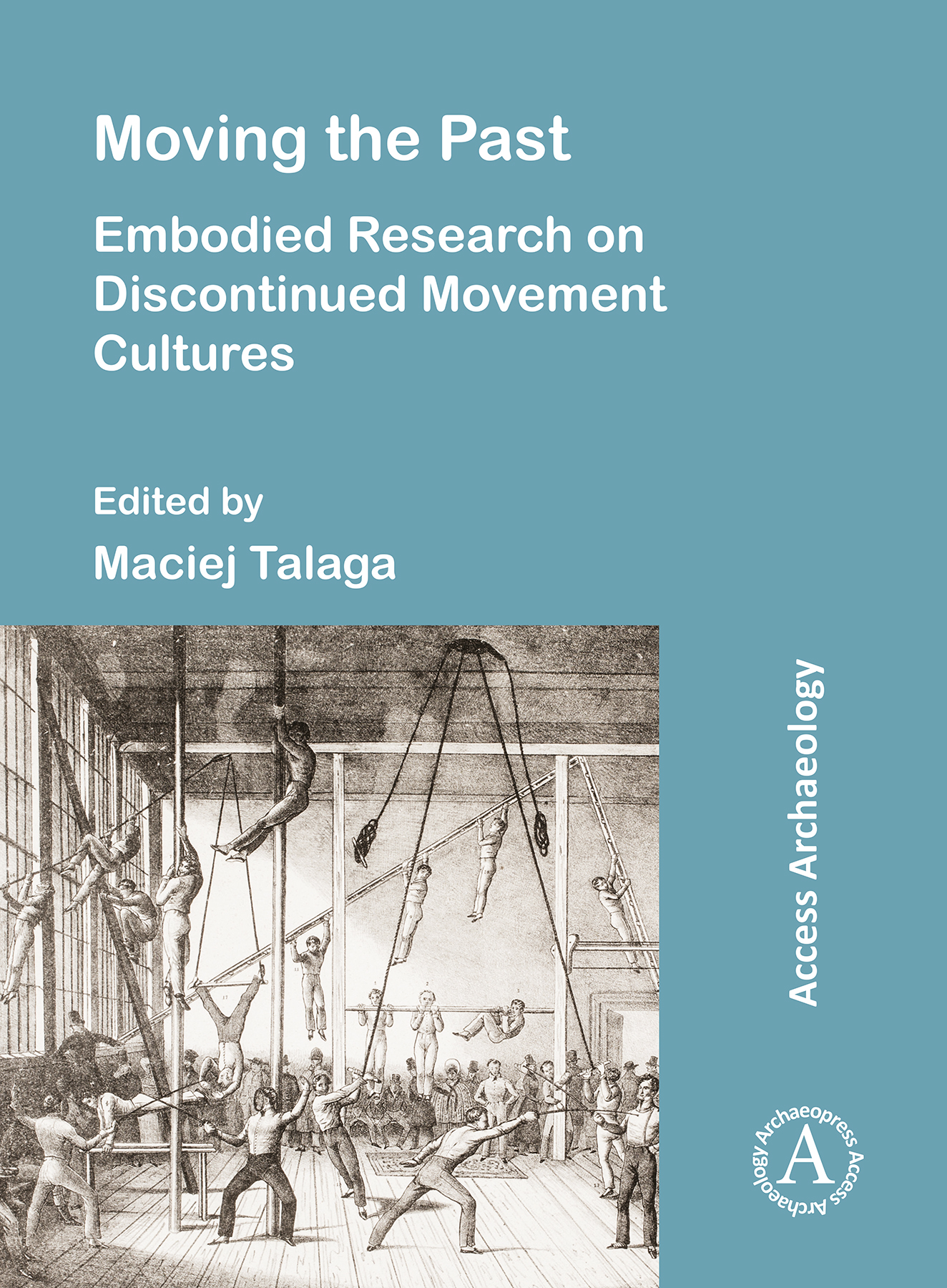
Download Sample PDF
H 276 x W 203 mm
110 pages
36 figres, 4 tables (colour throughout)
Published Dec 2025
Archaeopress Access Archaeology
ISBN
Paperback: 9781805831921
Digital: 9781805831938
Keywords
experiential archaeology; experimental archaeology; embodied practice; historical martial arts; HEMA; ancient warfare; medieval combat; reenactment studies; movement cultures; physical conditioning; combat reconstruction; archaeological method; autoethnography; embodiment theory
Moving the Past: Embodied Research on Discontinued Movement Cultures
Edited by Maciej Talaga

 Add to wishlist
This volume examines discontinued movement cultures through experiential research. Drawing on case studies from ancient combat to Irish wrestling and medieval training, it explores how embodied practice can illuminate past skills, methods, and the limits of reconstructing lost traditions.
Contents
Acknowledgements
Author Biographies
Introduction – Maciej Talaga
Chapter 1. Triangle of Diverging Incentives. Methods for Reconstruction of Personal Combat Techniques – Bartłomiej Walczak
Chapter 2. Leveraging Reenactment and Historical European Martial Arts (HEMA) for the Understanding of Ancient Combat – Paul M. Bardunias and Benjamin R. Truska
Chapter 3. Crooks, Hooks, Trips, and Taps. Reconstructing Irish Collar and Elbow Wrestling – Ruadhán MacFadden
Chapter 4. Gripping Affordances of Select Post-Medieval European Sidearms – Jerzy Miklaszewski
Chapter 5. Boots on the Ground: Late-Medieval Infantry Marches and Infrastructure – Charles Lin
Chapter 6. Going Medieval on the Body. An Autoethnographic Study on a Late-Medieval Fighter’s Physical Conditioning Regimen – Maciej Talaga and Krzysztof Kozak
Coda: Why Moving the Past? – Maciej Talaga
References
About the Author
Maciej Talaga, PhD, is an archaeologist and anthropologist specialised in the Central-European Late Middle Ages. His main research interests revolve around pre-modern body and movement cultures, especially late-medieval German martial arts, as well as embodied and self-reflective methodologies in the study of the past. Currently working as Assistant Professor at the University of Warsaw, he conducts parallel research projects on medieval martial culture and contemporary folk wrestling as part of intangible cultural heritage.
Archaeopress Publishing Ltd
First and Second Floor
13-14 Market Square
Bicester
Oxfordshire OX26 6AD
United Kingdom
Tel +44 (0) 1865 311914 | fax +44 (0) 1865 512231 | email info@archaeopress.com
