Oxford Wessex Archaeology Monograph 7
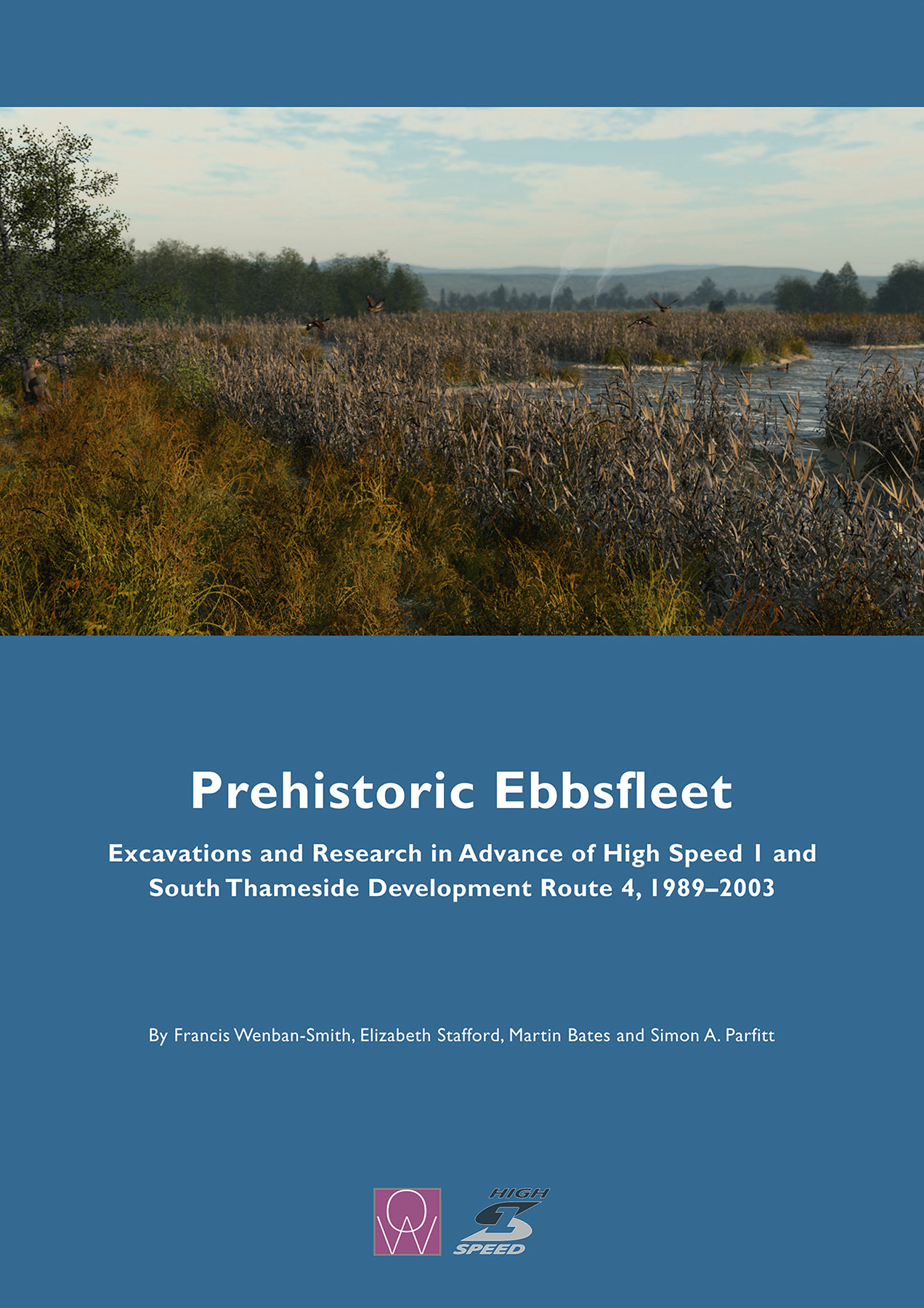
Prehistoric Ebbsfleet
Excavations and Research in Advance of High Speed I and South Thameside Development Route 4, 1989-2003
By Francis Wenban-Smith, Elizabeth Stafford

Hardback
£30.00
Add to basket
 Add to wishlist
Examines prehistoric Ebbsfleet through HS1 and South Thameside investigations, tracing landscape development and human activity from the Palaeolithic to the Early Iron Age. The volume brings together evidence for changing environments, occupation and use of the valley.
READ MORE
The construction of High Speed 1 (HS1; formerly the Channel Tunnel Rail Link) entailed a major programme of archaeological investigations across Kent, Essex and Greater London. This volume, the last in a series of reports, presents the archaeological results from investigations in the Ebbsfleet Valley undertaken between 1997 and 2003 on HS1. It also incorporates the results from the associated South Thameside Development Route 4 (STDR 4) road link improvements in the Lower Ebbsfleet Valley carried out for Kent County Council in 2000 and 2001, and investigations on the Ebbsfleet Development (Northfleet Rise) site carried out in 1997.
The results of the 2004 Oxford Archaeology early Palaeolithic ‘Ebbsfleet elephant’ excavation, carried out late in the HS1 construction programme, are reported separately (Wenban-Smith 2013).
This volume concerns the HS1 study theme defined as ‘Prehistoric Ebbsfleet’. It focuses on landscape development and human occupation from the Palaeolithic through to the Early Iron Age, a span of around 300,000 years. This period incorporates fluctuating extremes of climate between harsh sub-arctic conditions when southern Britain would have been a frozen and uninhabitable treeless waste, and warmer interludes when luxuriant forest was interspersed with grassy plains, rich in what we would now regard as tropical fauna, such as lion, hippopotamus and hyaena.
The Ebbsfleet Valley and its immediate area are rich in prehistoric remains, and the area has seen numerous investigations carried out from the 19th century onwards. Despite the lack of ‘modern’ excavation and recording methods, these sites have produced some nationally important sites including Baker’s Hole − Britain’s foremost Palaeolithic site with Levalloisian flint artefacts − rare evidence for ‘Long Blade’ occupation of Final Palaeolithic date, and the type-site for Neolithic Ebbsfleet Ware pottery.
The approach taken in this volume is to develop a framework for the changing landscape and environment of the Ebbsfleet Valley through this period, and to present the evidence of human occupation against this background. Although direct human evidence is largely lacking from the present investigations, the prolific results of earlier work have been integrated with the environmental and dating framework established as a result of the HS1 and STDR 4 works.
The results are initially presented by Zone within the Ebbsfleet Valley, with detailed specialist reports and development of zonal environmental and dating frameworks. The zonal results are then combined into an overall synthesis and discussion. A reappraisal of the important Palaeolithic flint artefact collections from Baker’s Hole and the Ebbsfleet Channel is also presented.