Thames Valley Landscapes Monograph 15
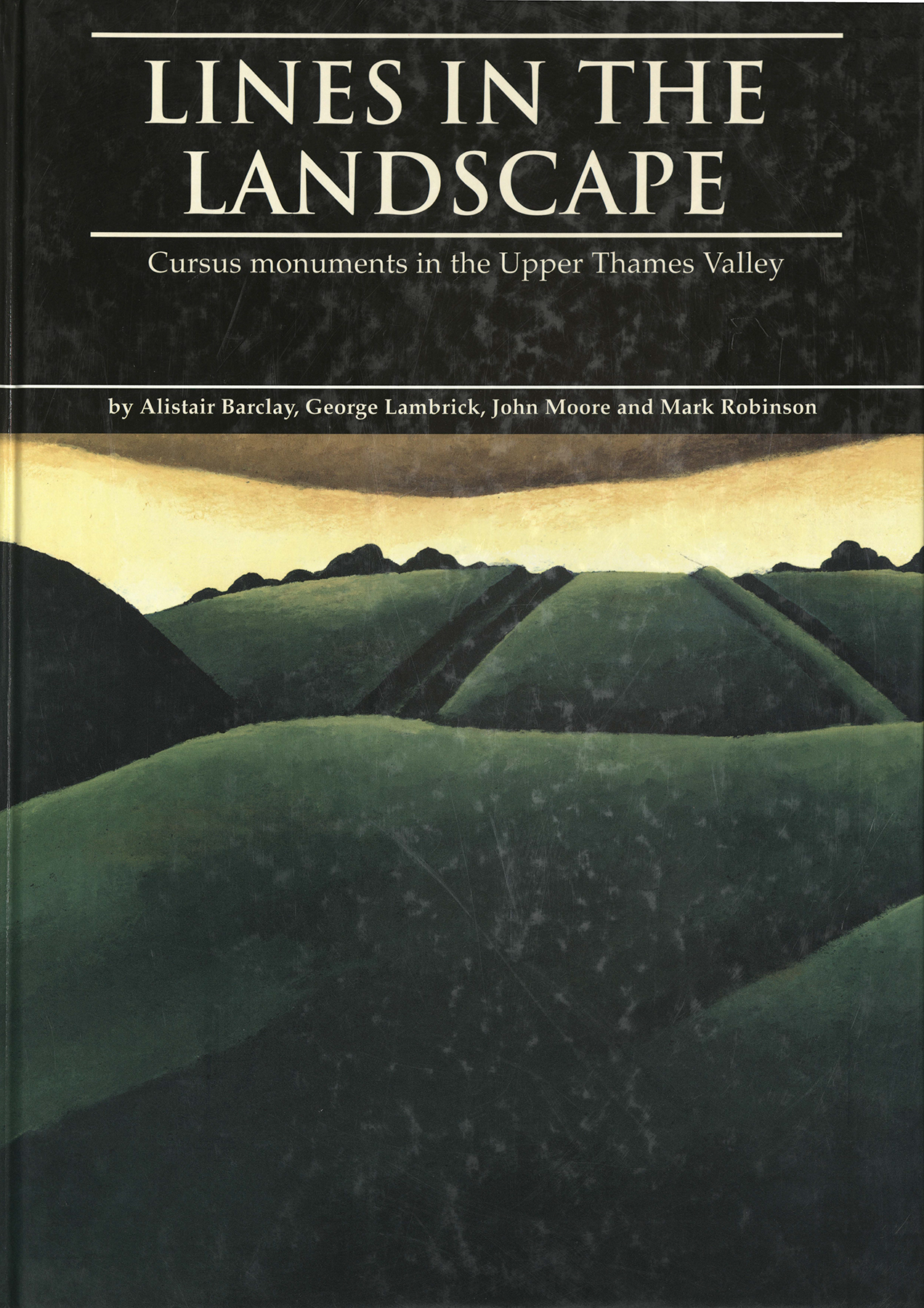
Lines in the Landscape: Cursus Monuments in the Upper Thames Valley
Excavations at the Drayton and Lechlade Cursuses
By Alistair Barclay, George Lambric, John Moor, Mark Robinson

Hardback
£35.00
Add to basket
 Add to wishlist
Reports excavations at the Drayton and Lechlade cursus monuments in the Upper Thames Valley. The volume examines Neolithic monument complexes, associated pits, graves and barrows, and the ways these long earthworks shaped later prehistoric landscapes.
READ MORE
Over a period of 20 years, excavations by the Abingdon Area Archaeological and Historical Society and the Oxford Archaeological Unit have taken place at the site of the Drayton (Sutton Courtenay) cursus complex. The site was first investigated in the 1920s by E T Leeds, and over a period of 50 years the extent of the monument complex was revealed by aerial photography. The cursus extends for 1.5 km and its path runs across the stepped topography of the First and Second Gravel Terraces close to the present course of the River Thames. Other Neolithic monuments within the complex include a long barrow, a long enclosure and an oval barrow. The cursus also became a focus for Neolithic pits and flat graves and an early Bronze Age barrow cemetery. Prior to the construction of the cursus, the area had been used by hunters and early farmers. Some tree clearance, perhaps to create pasture, had taken place in the early 4th millennium BC. Radiocarbon dating indicates that the cursus was built during the later 4th millennium BC and at a time when Ebbsfleet-style pottery was in general use. The cursus could have served as a ceremonial avenue and its close spatial association with smaller mortuary monuments suggests that it served a role that was somehow linked to funerary activities and the ancestral dead. It is argued that the cursus was built episodically in a series of stages and perhaps over a period of years or by successive generations. The line of the cursus was respected for some centuries after its initial construction, as Beaker burials and Grooved Ware pits were placed along its length and some small barrows appear to have been centered on its banks. However, by the early 2nd millennium BC a number of large round barrows were built within the interior. There is little evidence for activity during the 1st millennium BC, although the area may well have been kept open and used as pasture. A Roman settlement and field system was laid out across the cursus on the lower gravel terrace. The layout of some of these Roman ditches indicated that at least part of the cursus had survived as earthworks. Alluvium covered the lower lying fields and had preserved the ditches, banks, ploughsoil and ploughmarks of Roman date. Some evidence for Saxon ploughing was also preserved. Timber structures of possible Saxon date were recorded and these could be associated with the extensive settlement and palace complex at Sutton Courtenay. This volume also includes the results from a small-scale excavation at the Lechlade cursus and a gazetteer of cursus monuments in the Upper Thames Valley. The regional context of the two cursus monuments is explored and a wider discussion of this group of monuments is presented. There is also a summary of the excavation of a henge, barrows and middle Bronze Age enclosures at the adjacent site of Corporation Farm.