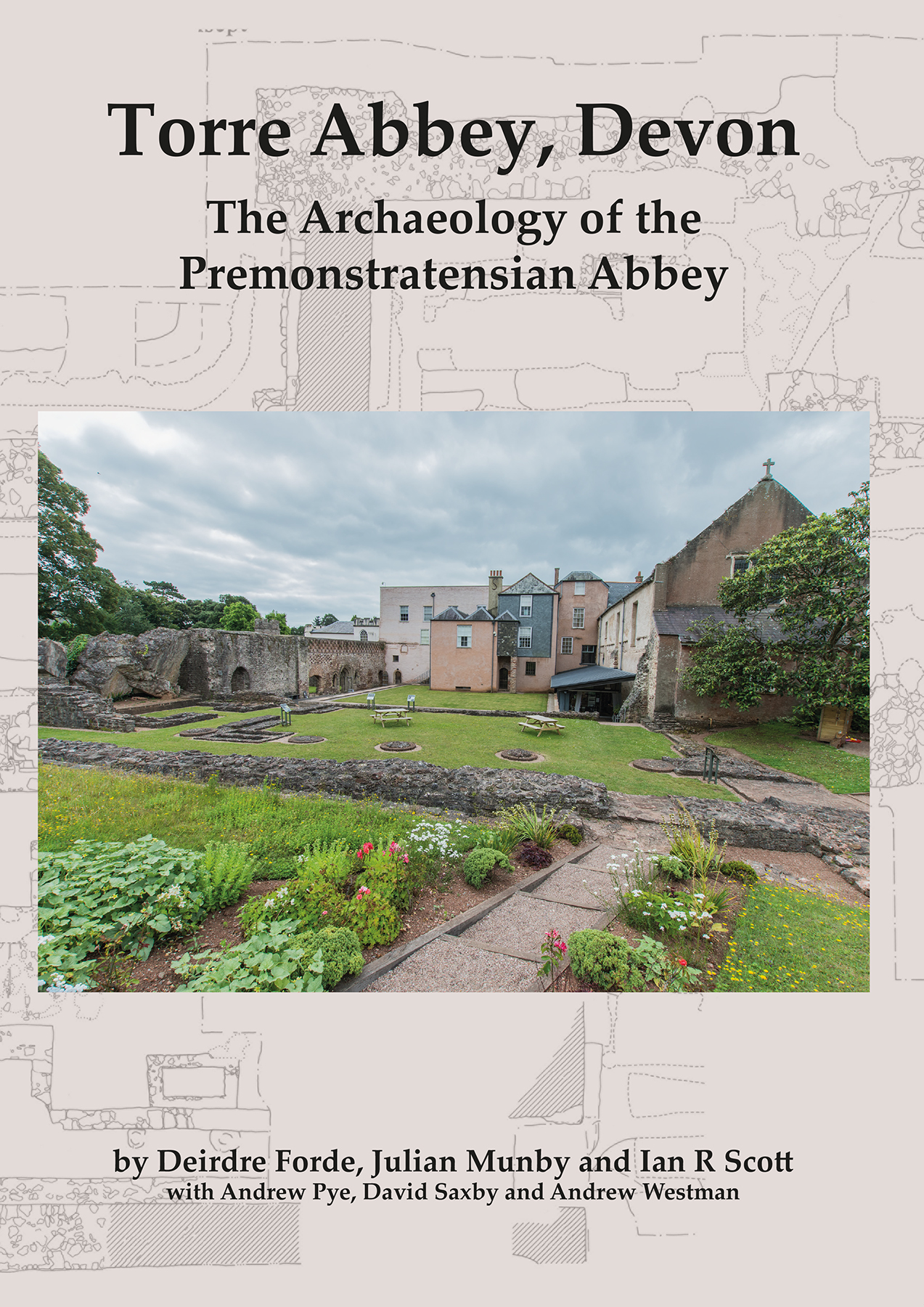
Oxford Wessex Archaeology Monograph 29
Torre Abbey, Devon
The Archaeology of the Premonstratensian Abbey
By Deirdre Forde, Julian Munby, Ian R. Scott
with Andrew Pye, David Saxby
Paperback
£20.00
Add to basket
Add to wishlist
This monograph presents decades of archaeological, architectural and documentary research at Torre Abbey, tracing its development from a 12th‑century Premonstratensian monastery to a post‑Dissolution mansion. Excavations reveal church and cloister structures, medieval fabric, later adaptations and notable finds including tiles and stained glass.
READ MORE
Torre Abbey, standing at the head of Tor Bay in south Devon, was founded in 1196 by William Brewer as a house of the Premonstratensian order, the ‘White Canons’ (who were not monks restricted to the cloister, but might serve as priests in the secular community). The church and the monastic buildings round the cloister were built soon after and not greatly modified in later medieval changes. After the dissolution of the abbey in 1539 the abbot’s house and part of the cloister were transformed into a mansion. The house belonged to the Cary family from 1662 until 1930, when it was taken over by Torquay Borough Council as a ceremonial centre and then a museum. Serious investigation of the site began with explorations by Hugh Watkin in the early 20th century, which established the extent of the monastic buildings. It was not until the 1980s that a major programme of excavation was undertaken on the church by the Exeter Museums Archaeological Field Unit, the results of which form the major part of this monograph. In the course of building repairs in the 1990s important observations were made on the historic fabric, and in the present century, a major reordering of the site and museum facilities led to a series of excavations and observations by Museum of London Archaeology, and for the later phase by Oxford Archaeology. These are reported here, together with other discoveries, including a series of geophysical investigations and the results of continuing historical and documentary research. The abbey church and claustral buildings were constructed from 1196. The church had a nave with a single aisle, a crossing and transepts with pairs of chapels, with stone vaults. The monastic choir extended from the nave screen through the crossing and into the chancel. Surviving stonework suggests there were a series of plain lancet windows, not dissimilar to Cistercian churches of that era. Later medieval changes included alterations to the choir and nave screen, and a refenestration of the church with more elaborate window tracery and stained glass. The tower over the crossings was rebuilt in the 14th century (and survived until destroyed in the 18th century). The church was a popular place for burial, and graves and monuments occur throughout the building, and particularly in the north-east chapel that was extended out from the north transept. The most significant finds from the church were the numerous sculptural fragments from monumental effigies, and the remains of miniature architecture from church fittings and monuments. These were only partial remnants of some fine monuments, though the nature of their destruction and partial removal did not allow an immediate association with individual tomb recesses or monuments in the church and chapels. Excavations in the cloister uncovered a series of changes to the arrangements for the central access to the monastic buildings, and evidence of reroofing, but relatively little survived in the way of architectural fragments, apart from large quantities of tiles. The cloister was used for a small number of burials, including a special one (possibly of an abbot) with a decorative grave slab, just outside the chapter house and sacristy. Other monuments of Torre abbots exist in a nearby parish church, and are published here. The east range of the cloister, being as usual the location of the chapter house and dormitory, has one surviving wall (rebuilt to form a post-medieval dovecote). This has a fine Romanesque portal to the chapter house, and remains of another high-status entrance to the sacristy were discovered in the recent works. The plan outline of the dormitory and latrine (reredorter) remains uncertain, though the east wall has now been found in two places. It remains likely that the ruined structure to the east was the monastic infirmary. The south range, built over a primary vaulted undercroft, has the appearance of a Georgian mansion, and both it and the pair of side wings to a large extent we