Oxford Archaeology Monograph 28
Footprints from the Past: The South-Eastern Extramural Settlement of Roman Alchester and Rural Occupation in Its Hinterland
The Archaeology of East West Rail Phase 1
By Andrew Simmonds, Steve Lawrence

Hardback
£20.00
Add to basket
 Add to wishlist
Excavations for the Bicester–Oxford rail improvements revealed middle Iron Age settlements, evidence of metalworking, two successive Roman roads, and extramural Roman occupation near Alchester, including buildings, field systems, farms and unusual finds. Most sites were abandoned by the early 3rd century.
READ MORE
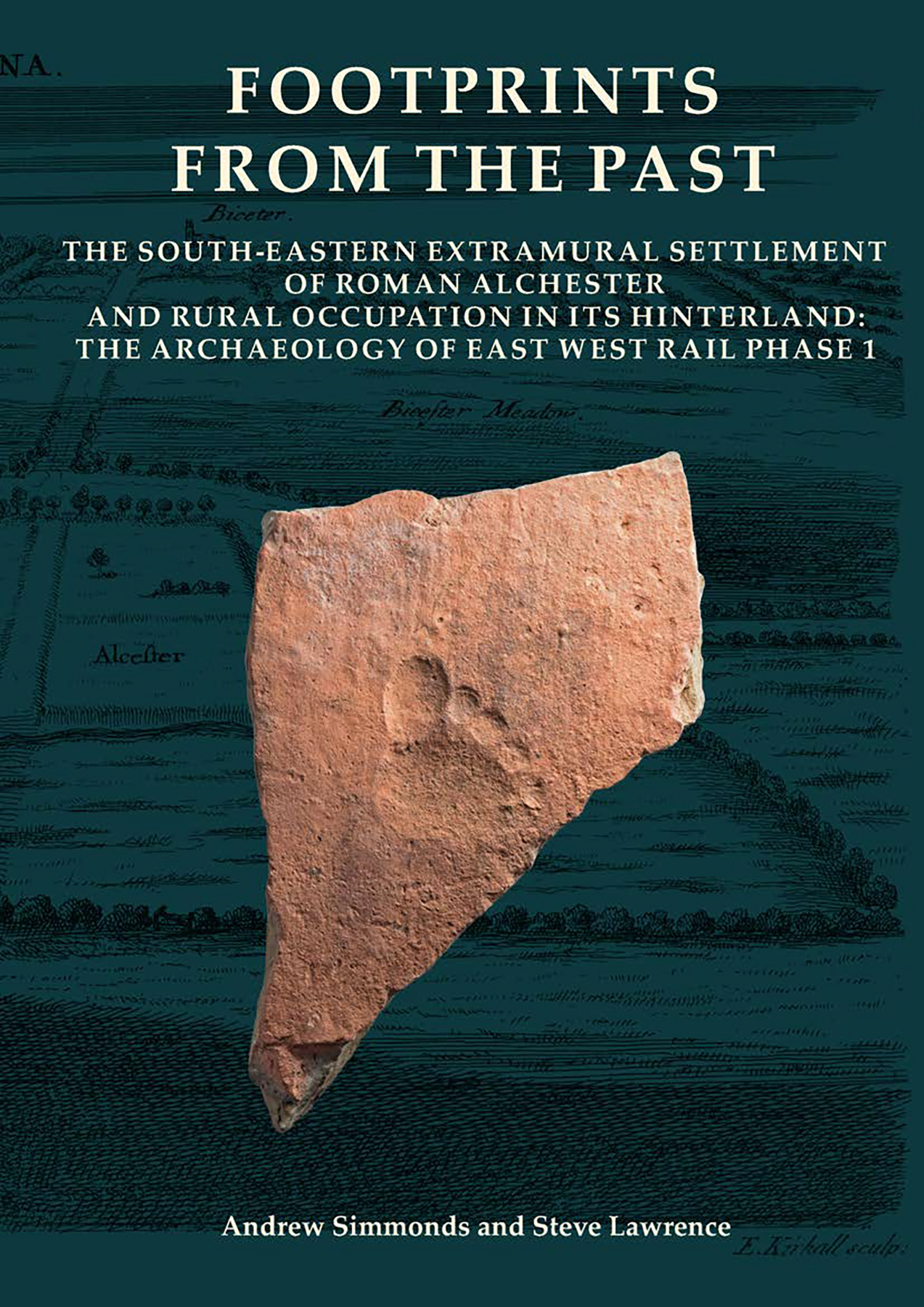
Excavations by Oxford Archaeology in advance of a programme of improvements to the railway between Bicester and Oxford investigated part of the south-eastern extramural settlement associated with the Roman fortress and subsequent town at Alchester, Oxfordshire, as well as rural settlements in its rural hinterland. The investigations at Alchester extended across two successive routes south to Dorchester-on-Thames, the earlier of which by-passed the eastern side of Otmoor and was superseded by a more direct route across the moor at the end of the 1st century AD. Settlement beside the earlier road may have been a successor to a pre-Roman settlement and appears from artefactual evidence to have been of quite high status during the initial, military phase, although no contemporary structural evidence was found. Stone-founded buildings were constructed during the late 1st-early 2nd century, including two single-celled structures of uncertain function that may represent a gatehouse or a pair of shrines. The buildings were demolished by c AD 200, when the area was abandoned. An insight into the diverse lives of the inhabitants is provided by finds that included part of a priestly headdress, two pairs of slave shackles and a group of roof tiles bearing the footprints of a young child. The extramural settlement may have been partly rural in character, involved in farming the landscape around the town, which was intensively managed for agricultural production, probably as meadow and pasture. Ditched enclosures beside the later road may have been part of a second extramural area or a discrete farming establishment. No buildings were identified but two large pits contained domestic refuse and building material. Excavations at six other locations investigated farmsteads that dated from the middle Iron Age to the 3rd century AD and included a rare deposit of debris from copper and iron working from a middle Iron Age enclosure ditch.