Oxford Archaeology Monograph 15
Trade and Prosperity, War and Poverty
An Archaeological and Historical Investigation Into Southampton's French Quarter
By Richard Brown, Alan Hardy

Paperback
£25.00
Add to basket
 Add to wishlist
Excavations in Southampton’s medieval French Quarter uncovered vaulted cellars, pits, wells and rich finds from 22 long‑lived tenements, including Polymond’s Hall. The results illuminate the town’s medieval prosperity, later decline, and the lived experiences of residents in this key port city.
READ MORE
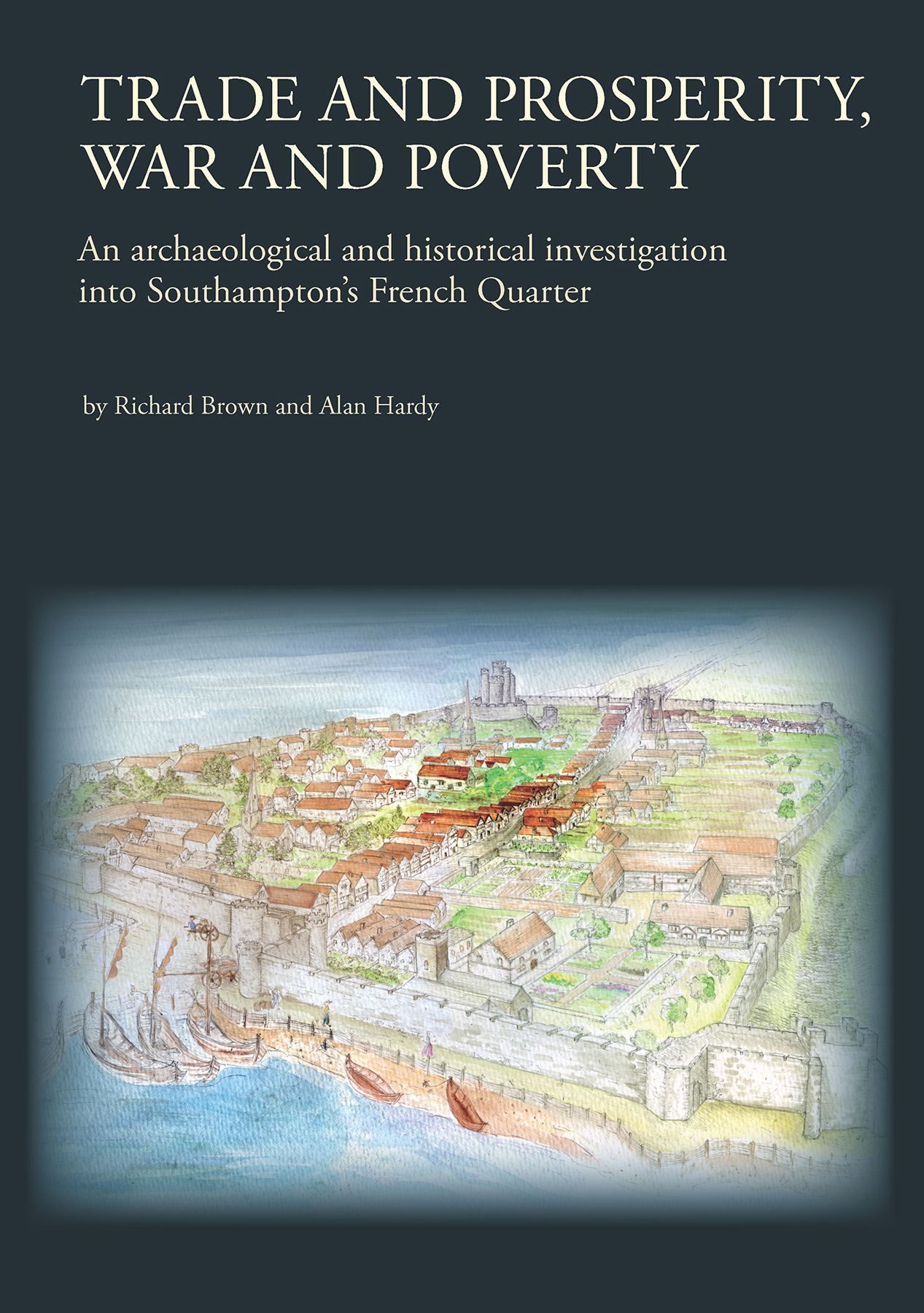
Southampton was one of England’s leading medieval ports. During the 13th century and again in the 15th century, its trade in major commodities such as wine, wool and cloth made it one of the most prosperous and cosmopolitan towns in the country. From the later 16th century, however, much of the international trade was lost to other ports (principally London) and Southampton suffered a long decline, until its fortunes revived with the growth of passenger trade to America in the mid 19th century. During the Second World War the city suffered devastating bombing, and here, as elsewhere, post-war reconstruction paid little regard to the historic character of the old town. Medieval property plots were widened or ignored, building heights increased, and the construction of the Castle Way inner ring-road during the 1950s sliced through the medieval gridded street pattern. In 2006 Oxford Archaeology were appointed by CgMs Consulting, acting on behalf of Linden Homes Southern, to carry out an excavation in advance of the construction of apartment blocks in the town’s medieval ‘French Quarter’. The site covered approximately 0.5 ha, bounded to the west and east by the historic frontages of French Street and the High Street (formerly English Street), where an impressive sequence of medieval vaulted cellars still survived. These were accompanied by numerous pits, cess pits and wells yielding significant finds and environmental assemblages, including rare and exotic items. The most significant property – Polymond’s Hall –had a distinguished history and was home to notable residents such as the Venetian Consul in the 15th century, and poet and hymn writer Isaac Watts in the 18th century. This book uses new evidence from the excavations to revisit many ongoing debates on the origins and development of Southampton. It also seeks to provide an evocation of the depth and richness of the town’s history and an insight into the lives of the occupants of the excavation area, in the heart of the late Saxon and medieval town. From the 13th century onwards, this included 22 tenements that survived for 650 years.