Oxford Archaeology Monograph 14
From Mesolithic to Motorway: The Archaeology of the M1 (Junction 6A-10) Widening Scheme, Hertfordshire
By Dan Stansbie, Paul Booth, Andrew Simmonds, Valerie Diez, Seren Griffiths

Paperback
£20.00
Add to basket
 Add to wishlist
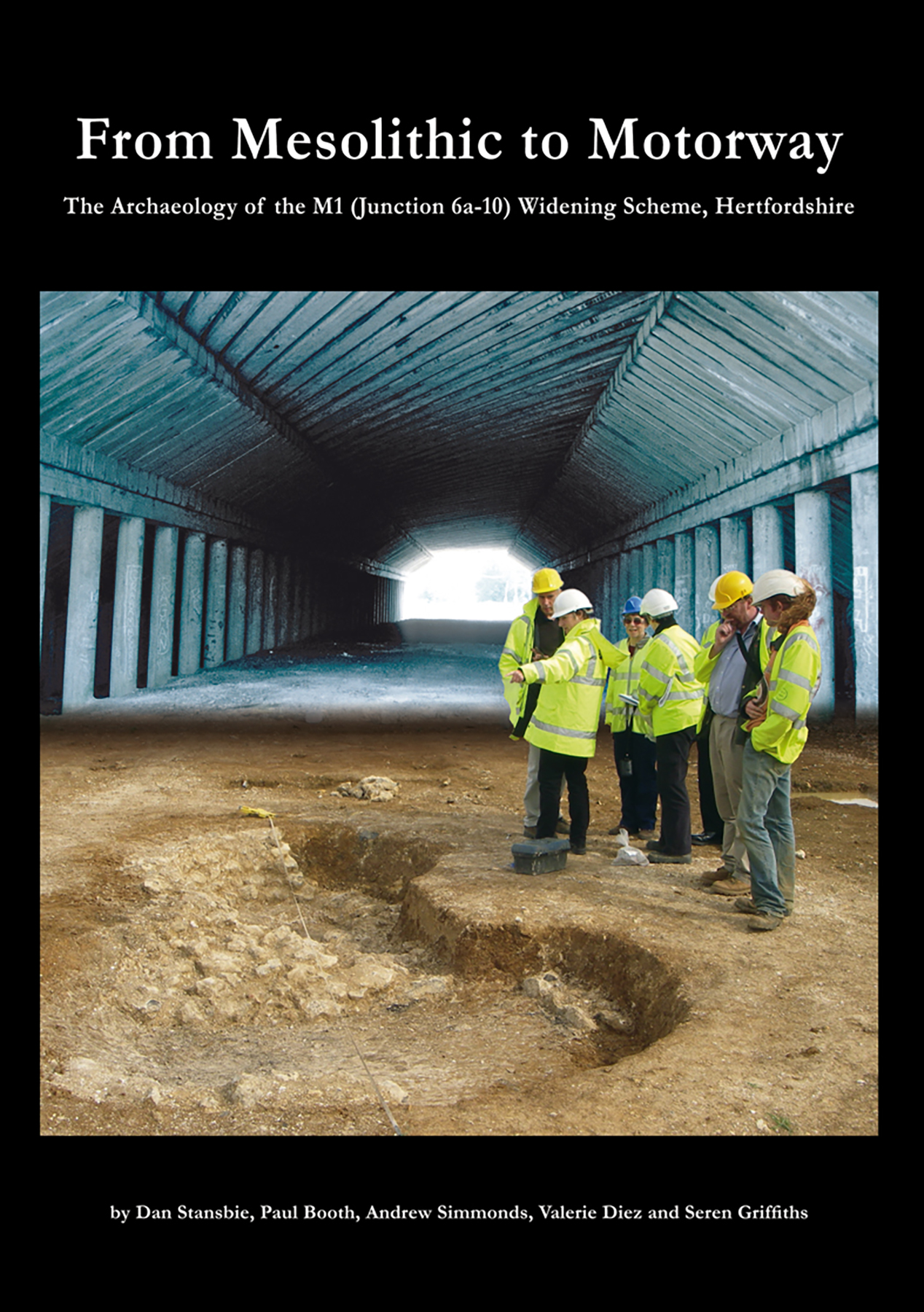
Archaeological work along the M1 (Junctions 6a–10) revealed late Mesolithic–Neolithic pits, Bronze Age cremations, Iron Age features, and widespread late Iron Age–Roman trackways and enclosures. Later activity was limited, with only sparse medieval remains, showing long-term low‑status rural land use.
READ MORE
A programme of archaeological work was undertaken by Oxford Archaeology in advance of engineering works to relieve congestion along the M1 between Junctions 6a to 10, a length of about 15km, stretching roughly south to north from a point east of Hemel Hempstead to just south of Luton, on the Bedfordshire border. The work was commissioned by Atkins Heritage, acting on behalf of Balfour Beatty/Skanska Joint Venture who undertook the M1 widening scheme for the Highways Agency. Significant remains of prehistoric, Roman and medieval date were encountered. Important evidence for late Mesolithic and early Neolithic activity, including pit features, was recovered from Junction 9. Later prehistoric evidence was less concentrated; ephemeral features adjacent to The Aubreys hillfort were poorly dated, but cremation burials and scattered features of late Bronze Age date came from Junction 8 southbound, which also produced probable Iron Age features, with other evidence of this period coming from Junction 8 Northbound and the adjacent Buncefield Depot site. The most widespread evidence was from the late Iron Age and Roman periods. Significant settlement-related features of this date occurred at Junction 8 Northbound and Junction 9, and to a lesser extent at the intervening Site M. Ditched trackways and enclosures were characteristic of all these sites, and further probable trackway ditches were present at Site P. Structural evidence was minimal, except for hearths and ovens, and the sites seem to have been of fairly low status and concerned with mixed agriculture. The evidence for earlier Roman occupation was generally stronger than that for the late Roman period. At Junction 8 Northbound, however, an east-west trackway seems to have survived as a landscape feature and in the 12th and 13th centuries was adjoined by a ditched enclosure containing a post-built structure. A few medieval features were also encountered in areas just to the north of Junction 8 Northbound, but were otherwise absent, nor were any significant post-medieval features found.