Oxford Archaeology Occasional Paper 12
The Tower of London New Armouries Project
Archaeological Investigations of the New Armouries Building and the Former Irish Barracks, 1997-2000
By Graham Keevill, Steve Kelly

Paperback
£7.50
Add to basket
 Add to wishlist
Investigations at the Tower of London (1997–2000) revealed limited Roman deposits, medieval structures by the inner curtain wall, and exceptionally preserved remains of the 18th‑century Irish Barracks, along with later features. The work clarifies occupation and rebuilding phases around the New Armouries and East Mint Street.
READ MORE
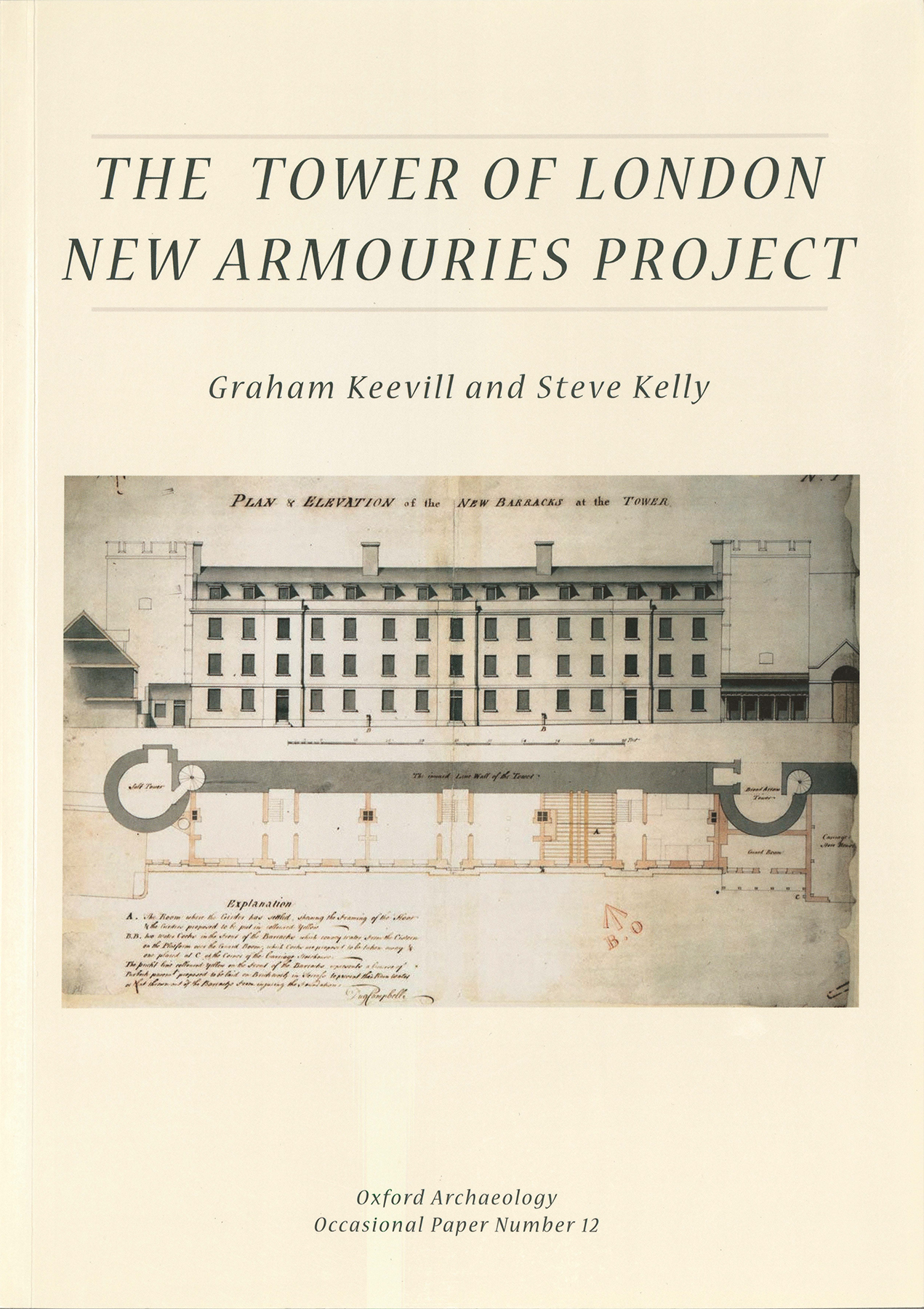
Oxford Archaeology carried out o series of archaeological investigations at the Tower of London during the period 1997-2000, on behalf of Historic Royal Palaces. The works were undertaken in advance of the development of new visitor catering facilities in the New Armouries building and the construction of o new kitchen on the site of the former Irish Barracks in East Mint Street. During excavation of the kitchen footprint, limited Roman deposits were identified in boreholes and pile cores. A medieval or earlier silty layer was found in the central area of the kitchen site, with a possible medieval pit to the north, and at least two phases of 17th century buildings were evident one of which could be matched with a range of buildings depicted in late 17th-century surveys of the Tower. Extensive, excellently preserved remains of Dugal Campbell's l8th century Irish Barracks were revealed, which closely matched the historic plan evidence. Some modern features were also found. Investigations at the New Armouries building revealed possible Roman features that ore difficult to interpret. Two phases of medieval buildings were identified adjacent to the l3th century inner curtain wall. These consisted of walls, chalk floor surfaces, three hearths and a possible domestic oven or light industrial forge. Finds from associated deposits date these structures to no later than the l4th century. Two pits containing later medieval finds probably post-dote these features. The medieval layers were cut by the foundations of the brick piers supporting the wooden columns of the New Armouries building, and associated make-up layers contained 17th century clay pipe bowls and ceramics. Later features included a probable Victorian culvert and drain as well as a brick plinth for a machine housing. Internal walls and foundations doting to the 20th century matched recent building survey records.