Thames Valley Landscapes Monograph 19
Green Park (Reading Business Park): Phase 2 Excavations 1995
Neolithic and Bronze Age Sites
By Adam Brossler, Robert Early, Carol Allen

Paperback
£14.99
Add to basket
 Add to wishlist
Excavations at Reading Business Park revealed Neolithic pits and a segmented ring ditch, middle–late Bronze Age cremations, field systems and a settlement with roundhouses, plus a large burnt mound. Finds show continuity in pottery traditions and evidence of shifting occupation into the medieval period.
READ MORE
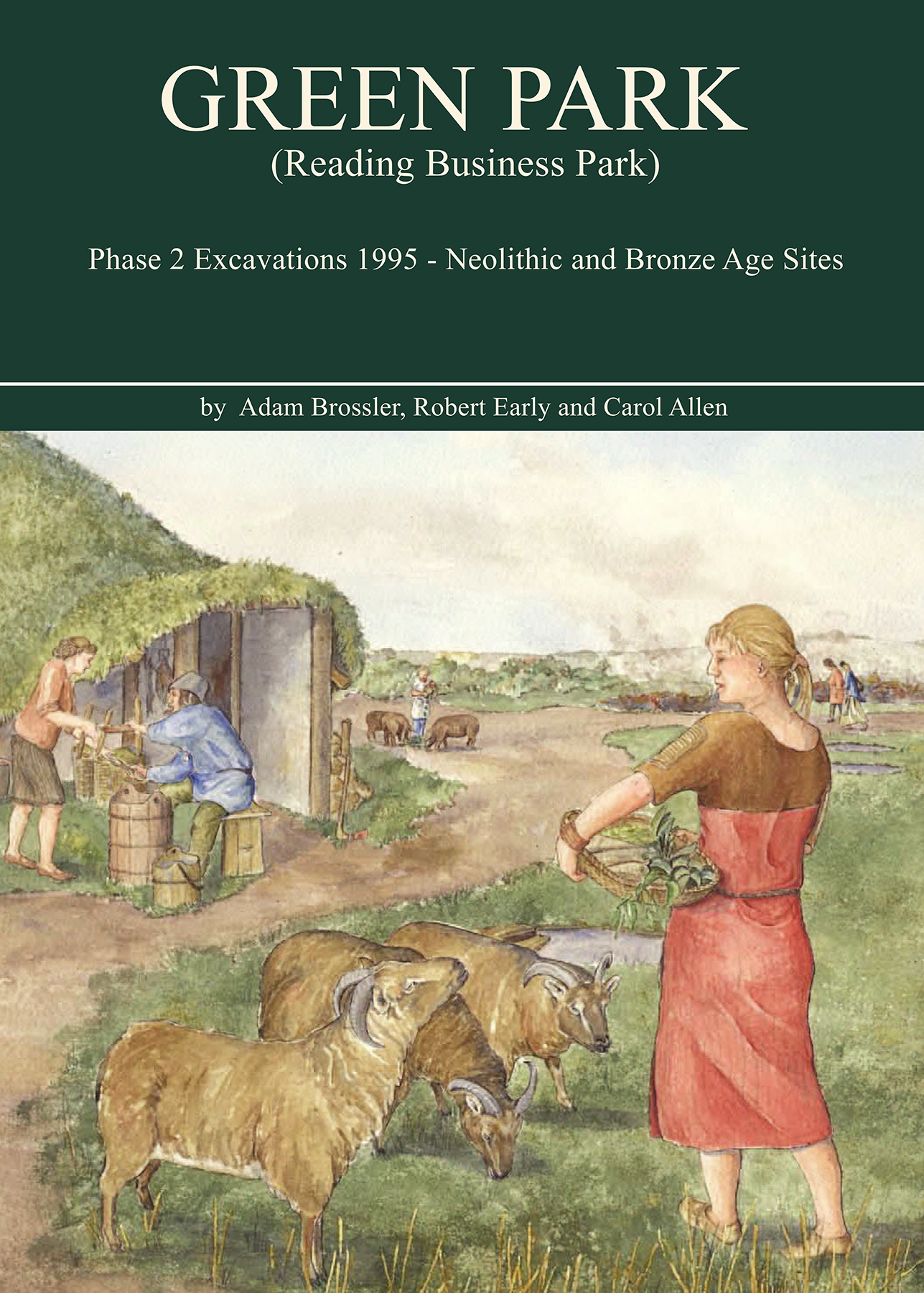
In 1995 a second phase of excavations was undertaken by Oxford Archaeological Unit (OAU) at Reading Business Park in advance of development. Two areas, 3017 and 3000B, were investigated covering about 2.2 ha. Evidence of occupation in the Neolithic, Bronze Age and medieval periods was found. In Area 3017 Neolithic features were uncovered, including an unusual segmented ring ditch, and a number of pits and postholes. The ring ditch was radiocarbon dated to the middle to late Neolithic, and an interesting flint assemblage from all features on the site was dated mainly to the later Neolithic. Numerous tree-throw holes also contained later Neolithic flint. Only two pits contained Neolithic pottery, one with Peterborough Ware and one with a Grooved Ware rim. In the earlier phase of Area 3000B Deverel Rimbury pottery was deposited in pits, in one case with two cremations. Dating of associated charcoal gave a middle to late Bronze Age date, identical to the date from another pit containing late Bronze Age pottery. A field system, composed of rectangular boundary ditches, was laid out in the area prior to the establishment of a late Bronze Age settlement. The late Bronze Age occupation area included five roundhouses, and a number of post-built structures. Waterholes, pits and postholes were also found, many of which contained late Bronze Age pottery. Some medieval activity was also present in this area. The pottery assemblage of Area 3000B is unusual as it shows continuity from the Deverel Rimbury pottery types of the middle Bronze Age to the plainwares of the later Bronze Age. Little decorated pottery was found in Area 3000B, in contrast to the adjacent Area 3100 previously excavated, suggesting the settlement had shifted over time. Other artefacts found include a shale bracelet, worked wood, with one piece possibly from a cheese press, and a worked piece of human skull. Interesting comparisons are made between the flintworking, economic activities and environment of the Neolithic and Bronze Age farmers at this location. In the later Bronze Age numerous deposits of burnt flint were made in the north-east of Area 3000B, and these grew into a substantial and unusually large elongated burnt mound. The origin of the deposits is discussed together with the management of the landscape in the later Bronze Age.